You may have thousands of members in your Facebook Group, Discord server, or LinkedIn community.
But how much of that community do you actually own?
The reality is that most online communities are built on platforms that control the experience, the data, and the rules. While these platforms can be effective for attracting new members, they often become limiting as communities grow.
That’s why more businesses, creators, membership organizations, and niche community builders are turning to self-hosted social networks.
A self hosted social network allows you to build and manage your own community platform, giving you greater control over branding, member data, customization, and monetization.
In this guide, we’ll explore how self hosted social networks work, why organizations are adopting them, common use cases, and how to choose the right platform for your needs.
What Is a Self-Hosted Social Network?
A self-hosted community platform gives you complete ownership of your data and full control over your community. By hosting the software on your own infrastructure—whether a VPS or cloud provider—you gain the freedom to customize every aspect of your community while avoiding the recurring costs and restrictions of traditional SaaS platforms.
Instead of building your community inside Facebook Groups, LinkedIn Groups, Discord servers, or other external platforms, a self hosted social network allows you to create an independent social experience under your own brand, domain, and ecosystem.
Members can create profiles, join groups, participate in discussions, share content, attend events, send messages, and interact with one another—similar to traditional social media platforms. The difference is that your organization controls the experience.
With a self hosted social network, you’re not limited by changing algorithms, platform policies, or restrictions that can impact visibility and engagement. You have greater ownership of your audience, member data, branding, and monetization strategy.
For businesses and community builders, this means creating a long-term digital asset rather than relying entirely on rented platforms.
Self-hosted Social Network vs Social Media
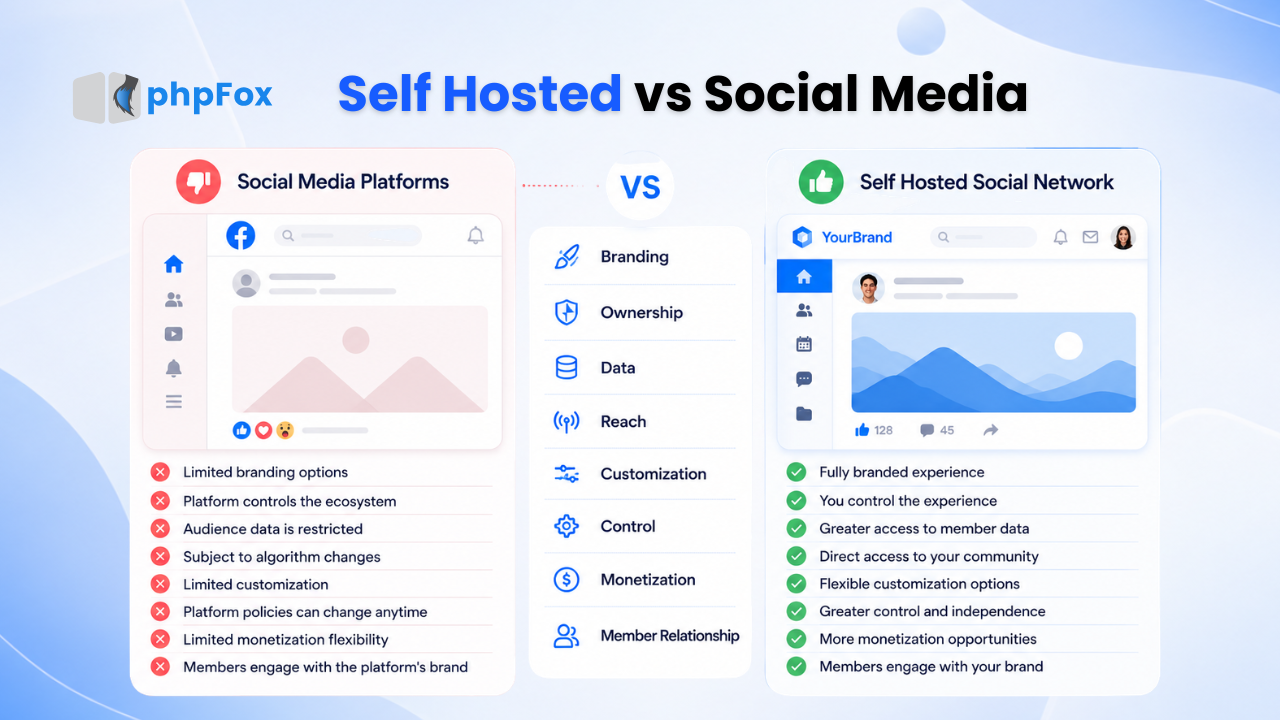
The biggest difference between social media platforms and self hosted social networks comes down to ownership. One allows you to build on someone else’s platform, while the other lets you build an asset you fully control. Here’s a side-by-side comparison.
For many organizations, social media platforms are the first place they build a community. They’re familiar, easy to launch, and already have large user bases.
However, as communities grow, many founders and community managers realize that social media platforms were never designed to support long-term community ownership.
A self hosted social network offers a different approach—one that prioritizes ownership, flexibility, and direct relationships with your members.
While social media can still play an important role in audience acquisition, many organizations use it primarily as a discovery channel rather than their primary community destination.
Self-hosted Social Network vs SaaS Community Platforms
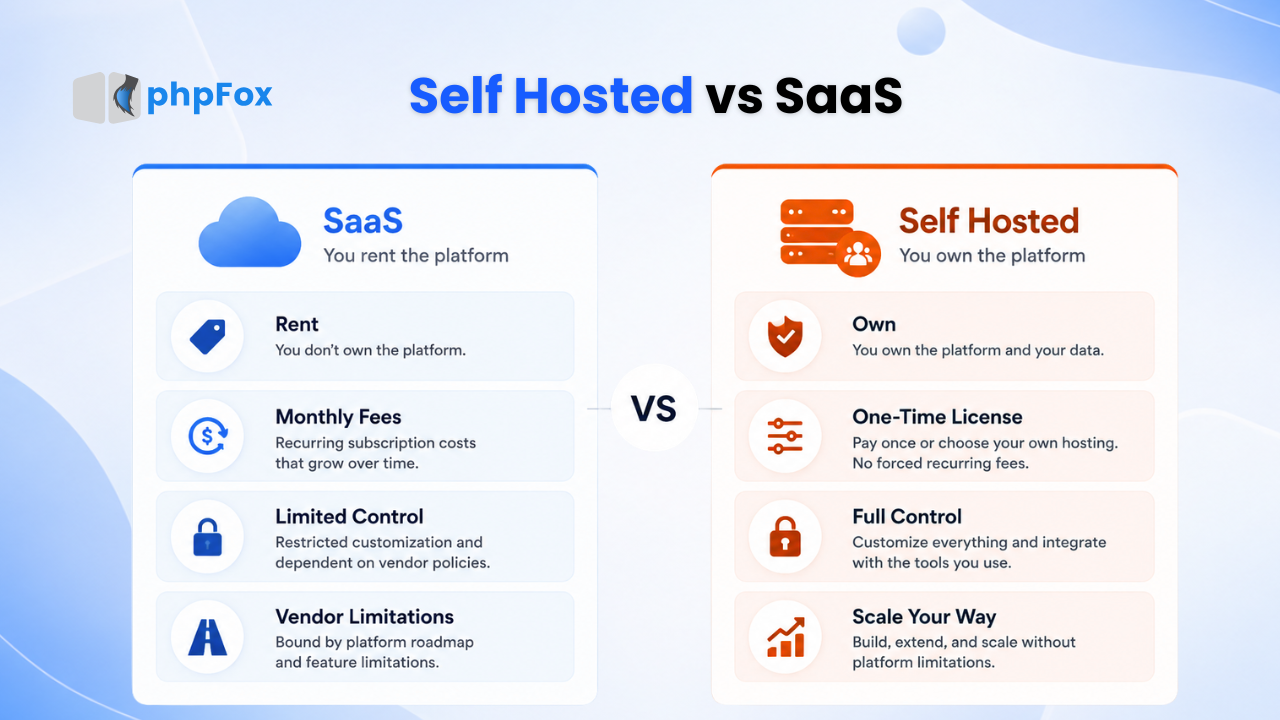
Many organizations evaluating community software eventually face another important decision: Should you choose a self hosted social network or a SaaS community platform?
While both options can help you build an online community, they differ significantly in terms of ownership, customization, scalability, and long-term control. The comparison below highlights the key differences between SaaS community platforms and self hosted social networks.
SaaS Community Platforms
SaaS platforms such as Circle, Mighty Networks, and Bettermode provide a hosted solution that can be launched quickly without managing infrastructure. They are often a good fit for creators or businesses looking for a simple setup process and minimal technical involvement.
However, SaaS platforms typically come with limitations around:
- Customization
- Data ownership
- Integrations
As your community grows, these restrictions can become more noticeable.
If you’re still evaluating whether a self hosted or SaaS approach is the better fit for your business, we’ve covered the differences of Self-hosted social network vs SaaS social network.
Self-hosted Social Networks
A self hosted social network gives you full control over your platform, branding, data, and user experience.
You can customize the community to fit your exact business requirements, integrate with your existing systems, and scale without being constrained by the roadmap or policies of a third-party provider.
This approach is often preferred by organizations that view their community as a long-term business asset rather than simply another marketing channel.
The right choice ultimately depends on your goals. If ownership, customization, and long-term control are priorities, a self hosted social network often provides greater flexibility as your community grows.
Key Features of a Self-hosted Social Network
While capabilities vary between platforms, most self hosted social network software includes features such as:
- Member Profiles: Allow members to create personal profiles, showcase their interests, and build meaningful connections within the community.
- Activity Feeds: Keep members informed with a centralized stream of updates, discussions, announcements, and community activities.
- Discussion Forums: Create dedicated spaces where members can ask questions, share knowledge, and participate in conversations around shared interests.
- Groups and Subcommunities: Organize members into smaller, focused groups based on topics, industries, locations, or specific interests.
- Direct Messaging: Enable private one-on-one or group conversations to foster deeper engagement and collaboration.
- Events and Webinars: Host virtual events, workshops, webinars, and meetups that bring members together and encourage participation.
- Content Sharing: Allow members to publish posts, photos, videos, documents, and other resources that add value to the community.
- Mobile Apps: Give members the flexibility to access and engage with the community anytime, anywhere from their mobile devices.
- Monetization Tools: Generate revenue through memberships, subscriptions, premium content, courses, events, or marketplace offerings.
- Analytics and Reporting: Track engagement, member activity, and community performance to make data-driven decisions and support long-term growth.
These features help organizations create engaging online communities while maintaining full control over the member experience.
How Organizations benefit from Self-hosted Social Networks
As communities become increasingly important for customer engagement, retention, and audience growth, many organizations are realizing the limitations of relying entirely on third-party platforms.
A self hosted social network provides greater control, flexibility, and ownership—allowing organizations to build communities that support their long-term goals.
Here are some of the main reasons businesses, creators, and community builders are making the switch.
Greater Ownership of Your Audience
When your community exists on a social media platform, you’re essentially renting access to your audience.
A self hosted social network gives you greater ownership of member relationships, audience data, and communication channels. Instead of relying on a third party to connect with your members, you can build direct and lasting relationships under your own brand.
More Control Over Branding and User Experience
Your community is an extension of your brand.
With a self hosted social networking platform, you can create a fully branded experience that reflects your identity, values, and business goals. From your domain name and design to the overall member journey, you control how the community looks and functions.
Freedom From Algorithms and Platform Restrictions
Many organizations have experienced declining reach, changing algorithms, or unexpected policy updates on social media platforms.
A self hosted social network allows you to engage members without depending on algorithm-driven visibility. Your community remains accessible on your terms, helping you build a more predictable and sustainable engagement strategy.
Better Monetization Opportunities
As communities grow, many organizations look for ways to generate revenue through memberships, subscriptions, premium content, courses, events, or digital products.
Unlike many social platforms, self hosted social network software provides greater flexibility to create monetization models that align with your business objectives while maintaining full control over the member experience.
Long-Term Community Growth
Communities often start small but evolve quickly.
A self hosted social network gives organizations the flexibility to scale, customize features, introduce new engagement tools, and adapt as member needs change. Rather than outgrowing a platform, you can continue building a community that grows alongside your business.
Common Use Cases for Self-hosted Social Networks
Self-hosted social networks can support a wide range of community goals, from customer engagement and peer support to networking, education, and brand advocacy. Here are some of the most common use cases.
Customer Communities
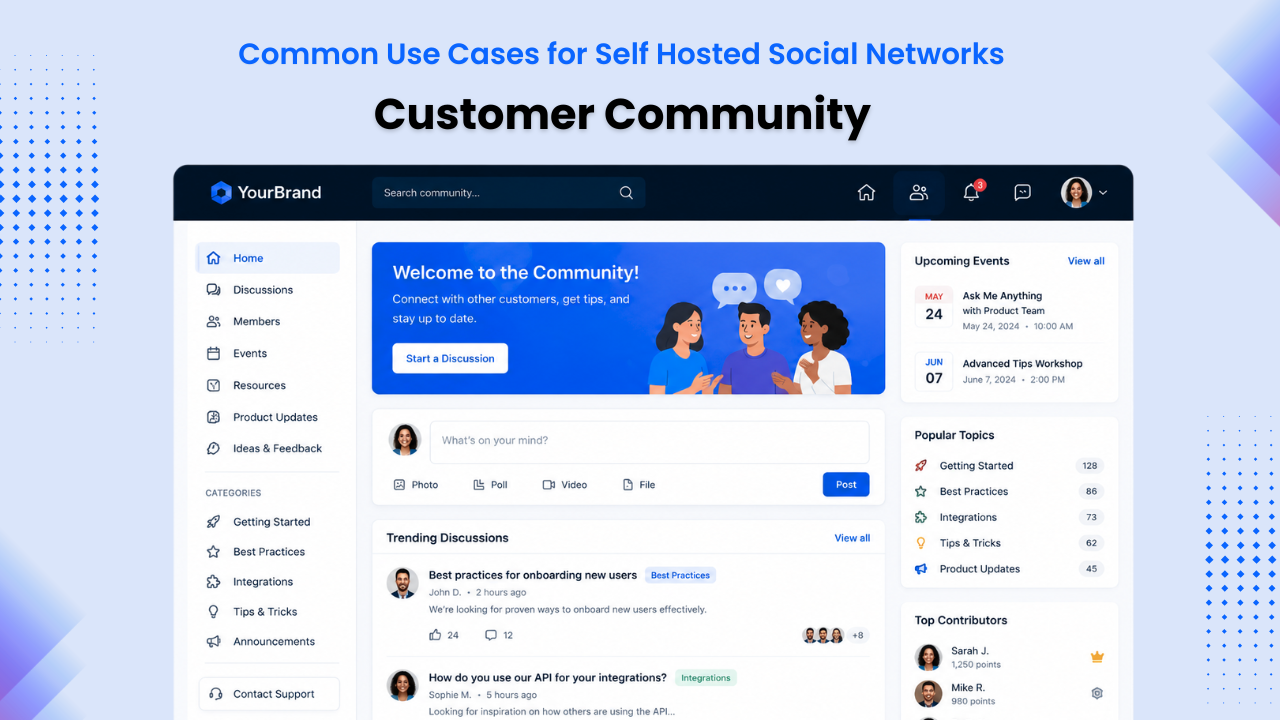
Many software companies and technology brands use customer communities to help users find answers, share best practices, and connect with peers.
One of the best-known examples is Salesforce’s Trailblazer Community. The community allows customers, partners, and experts to exchange knowledge, ask questions, and learn from one another. Today, it supports millions of members and has become a key part of Salesforce’s customer success strategy. Salesforce reports that community participation helps members learn new products, accelerate innovation, and increase adoption.
For businesses, customer communities can reduce support costs, improve customer retention, and create a valuable feedback loop between users and the product team.
Creator Communities
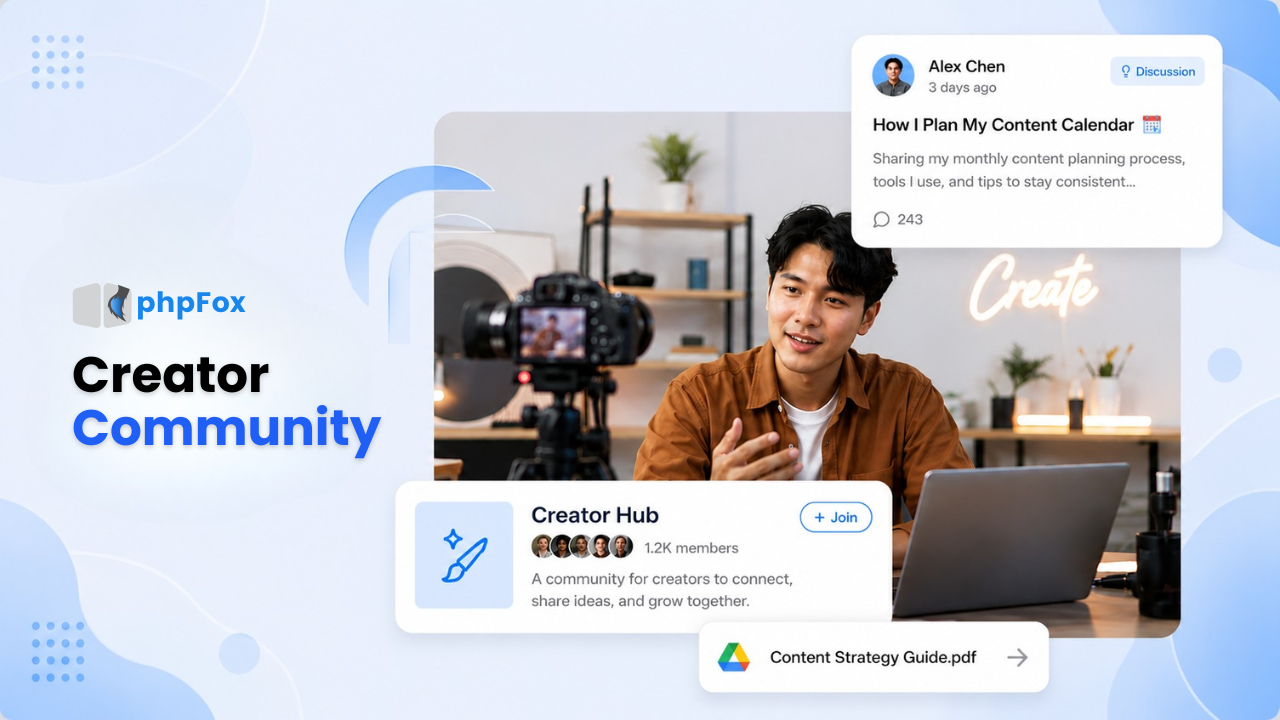
Many creators, coaches, educators, and industry experts are moving beyond social media platforms and building communities they fully control.
These communities often combine discussions, exclusive content, memberships, courses, events, and networking opportunities in a single destination. Instead of relying solely on social media algorithms, creators can build direct relationships with their audience and create recurring revenue streams.
Membership Communities
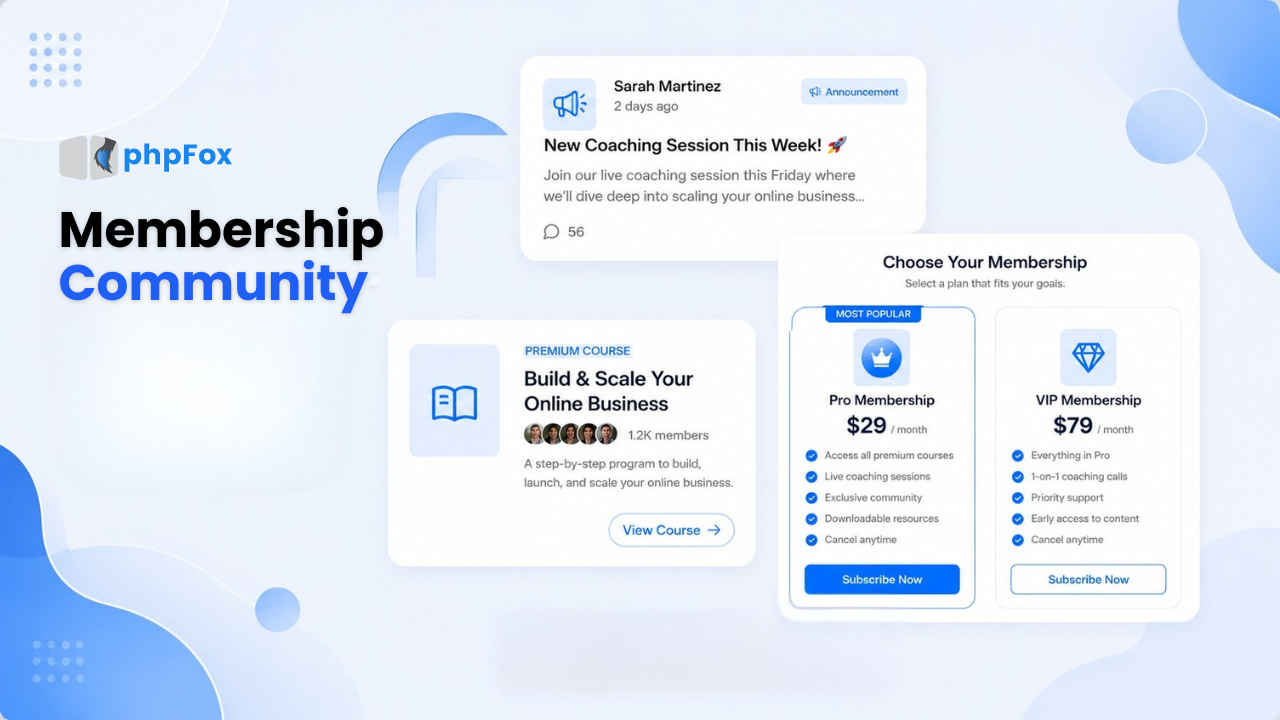
Associations, professional organizations, and nonprofits frequently use self hosted social networking platforms to provide year-round value to members.
These communities help members connect with peers, participate in discussions, access resources, and attend virtual events. For many organizations, the community becomes one of the primary reasons members continue to renew their memberships.
Private Social Networks
Some businesses want to create a complete social networking experience under their own brand.
In these communities, members can create profiles, join groups, share content, send messages, and build relationships within a dedicated ecosystem. This approach is commonly used by brands, franchises, educational organizations, and businesses looking to strengthen engagement among customers or partners.
Specialized Interest Communities
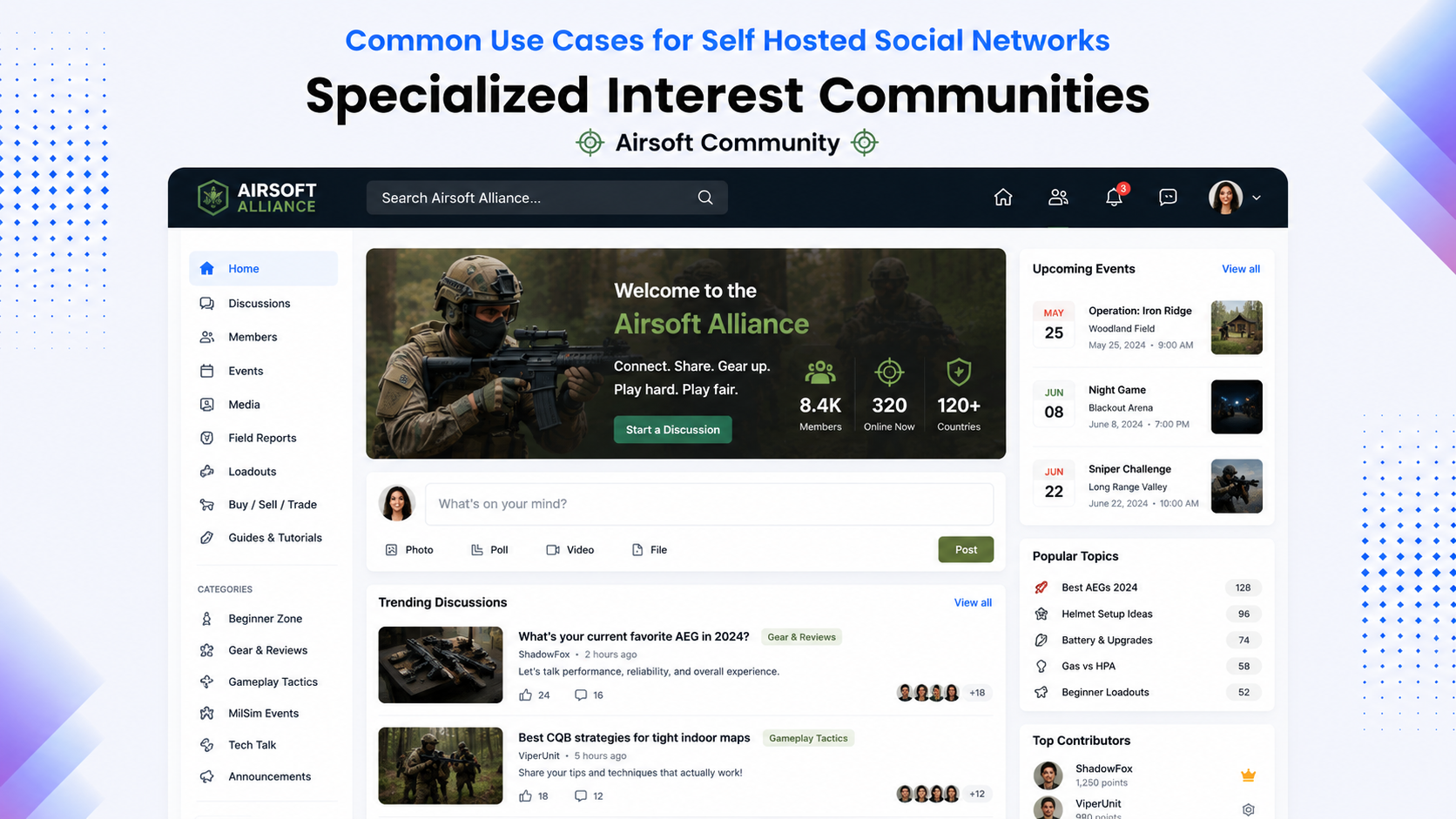
Not every community fits comfortably within mainstream social media platforms.
Some organizations serve highly specific audiences that require greater privacy, independence, moderation control, or branding flexibility. A self hosted social network allows these communities to create a space tailored to their unique needs while maintaining full control over the member experience.
Employee Communities
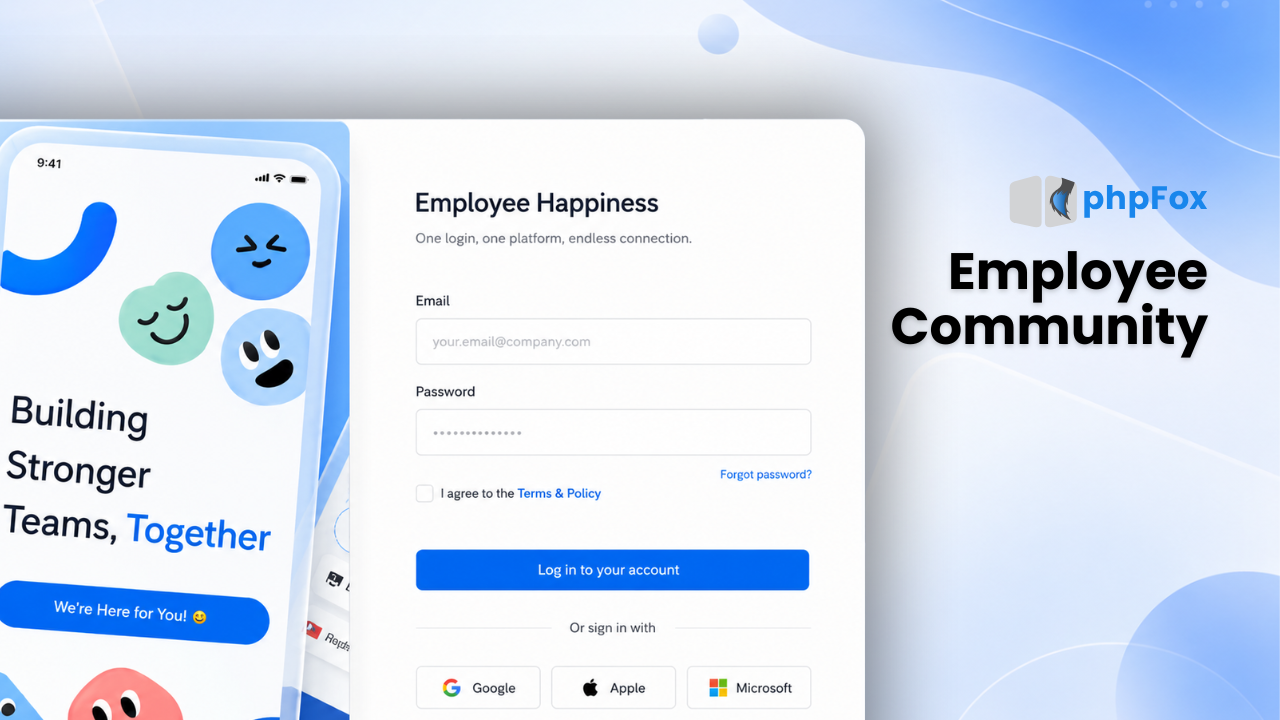
Businesses with distributed or remote teams often use private social networks to improve communication, collaboration, and knowledge sharing.
Internal communities can help employees stay connected, exchange ideas, and strengthen company culture regardless of location.
Innovation and Co-Creation Communities
Some brands use communities not only for engagement but also to drive innovation.
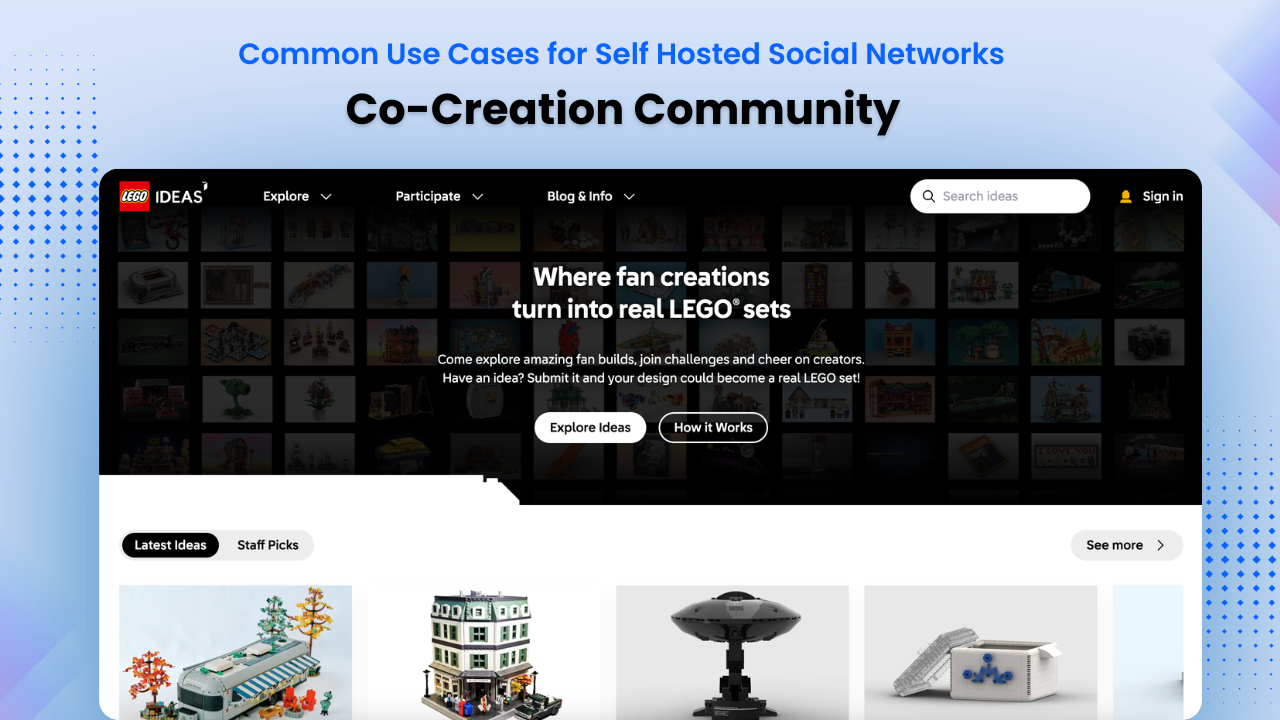
LEGO Ideas is a well-known example. The platform allows community members to submit product ideas, vote on concepts, and contribute to product development. Over the years, LEGO has used community participation to strengthen loyalty, gather product feedback, and identify new opportunities for innovation. Several community-generated ideas have even become official LEGO products.
This type of community transforms customers from passive consumers into active contributors, creating stronger engagement and deeper brand affinity.
No matter which type of community you’re building, the right platform can make a significant difference in how members engage, connect, and grow together.
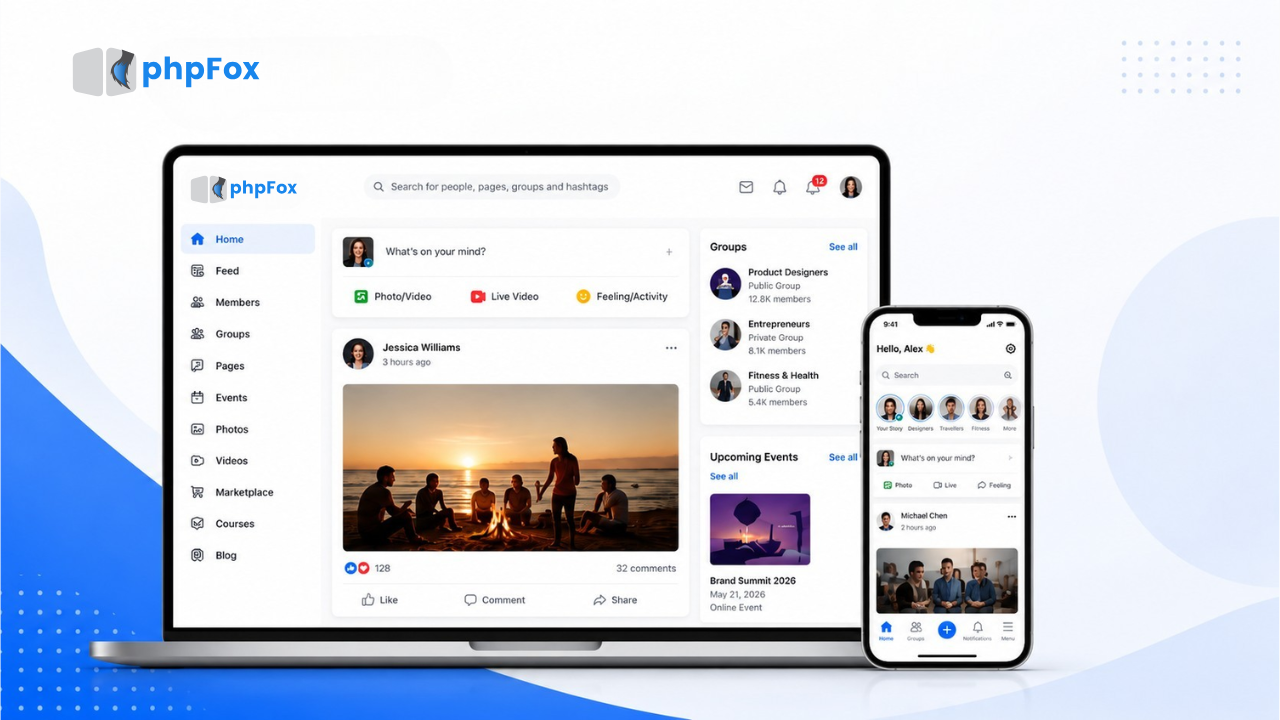
phpFox supports a wide range of community models—from customer communities and membership sites to creator networks, employee communities, and niche social platforms. With features such as member profiles, activity feeds, discussion forums, groups, direct messaging, events, subscriptions, content sharing, monetization tools, and native mobile apps, you can build a community experience tailored to your goals.
How Much Does a Self-hosted Social Network Cost?
Initial Investment ($1000+)
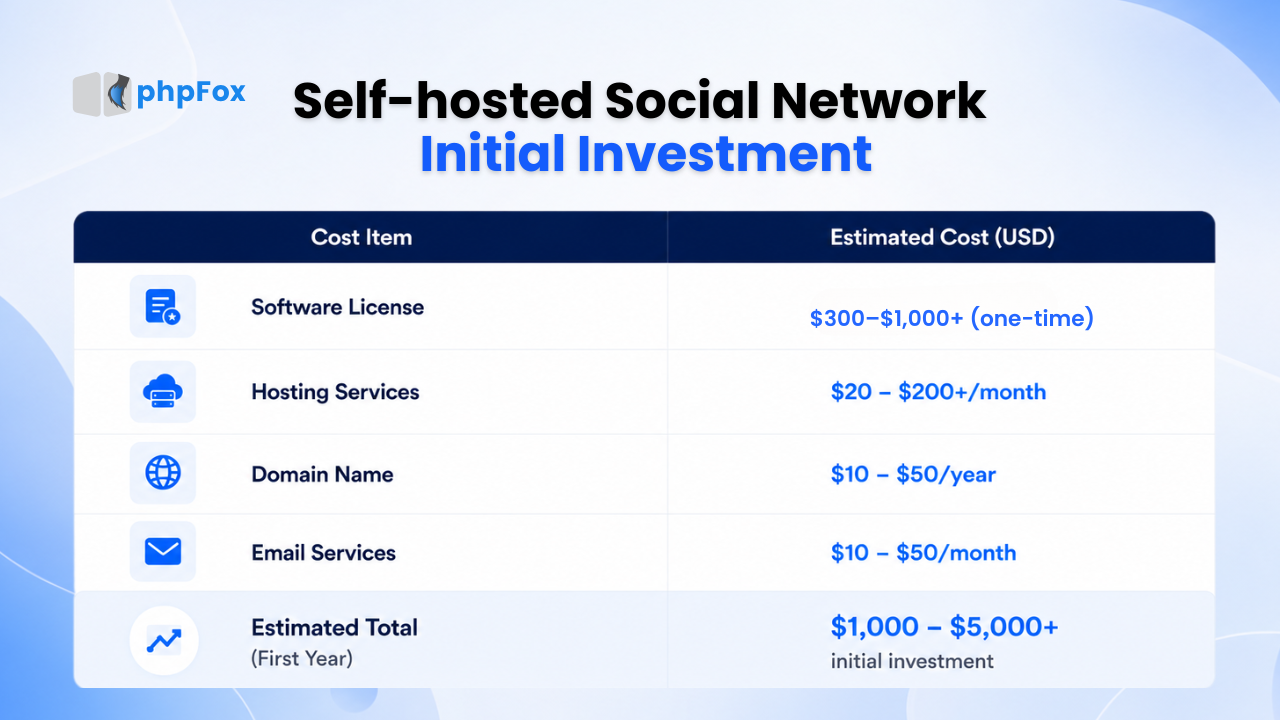
With a self hosted social network, organizations typically purchase a software license and host the platform on their own infrastructure or through a hosting provider.
Common investments may include:
- Software License: $200,000–$1,000+ (one-time)
- Hosting Services: $20–$200+/month
- Domain Name: $10–$50/year
- Email Services: $10–$50/month
- Mobile Apps (Optional): Additional cost depending on provider
For most small to medium-sized communities, the initial investment typically ranges from $1,000 to $5,000+, depending on the platform, hosting requirements, and level of customization needed.
While the upfront investment is usually higher than a monthly SaaS subscription, many organizations prefer this model because it provides greater ownership, flexibility, and long-term cost predictability.
Custom Development and Future Enhancements ($500–$50,000+)
As your community grows, you may decide to customize the platform to better support your business processes, member experience, or monetization strategy.
Common investments may include:
- Custom features
- Third-party integrations
- Design customization
- Mobile app enhancements
- Version upgrades and ongoing maintenance
The cost of these enhancements can vary significantly depending on the complexity of your requirements. Some organizations only need minor customizations, while others invest in advanced features tailored to their business model.
It’s also important to plan for ongoing platform maintenance and software updates. Regular updates help keep your community secure, compatible with new technologies, and equipped with the latest features and improvements.
How to Choose the Right Self-hosted Social Network
With so many community platforms available today, choosing the right solution can feel overwhelming. The best platform isn’t necessarily the one with the most features—it’s the one that aligns with your business goals, growth plans, and community strategy.
Here are a few factors to consider before making a decision.
Define Your Community Goals
Start by identifying what you want your community to achieve. Are you building a customer community, creator network, membership site, employee community, or niche social platform? Your goals will help determine which features and capabilities matter most.
Evaluate Customization and Branding Options
A self hosted social network should allow you to create an experience that reflects your brand. Look for customization options such as themes, navigation controls, custom pages, and white-label mobile apps if branding is a priority.
Consider Scalability
Your needs today may be very different from your needs two years from now. Choose a platform that can support community growth without requiring a complete migration as your member base expands.
Review Integrations
Consider how the platform connects with the tools you already use, such as CRM systems, email marketing platforms, payment gateways, learning management systems, and analytics tools.
Compare Total Cost of Ownership
Don’t focus solely on the initial purchase price. Consider hosting, maintenance, future customizations, and long-term operating costs to understand the total investment required.
Test the User Experience
A great community platform should be easy for both administrators and members to use. Whenever possible, explore a demo or free trial to evaluate the onboarding experience, navigation, and overall usability.
Assess Vendor Support and Product Development
Strong documentation, responsive support, and an active product roadmap can save significant time and effort as your community grows. Choosing a platform with a proven track record can reduce risk and help ensure long-term success.
Final Thoughts
A self hosted social network gives you more than just a place to connect members—it gives you greater control over your brand, audience, and future growth.
Whether you’re building a customer community, creator network, membership platform, or niche social network, the right platform can help you create a community that grows on your terms.
If you’re looking for a self hosted social network with powerful community features, flexible customization, native mobile apps, and full data ownership, phpFox is worth exploring.
Start your free trial today and see how phpFox can help you build, grow, and own your online community.