
Social networking software helps businesses, organizations, creators, and community builders create dedicated online spaces where people can connect, share content, communicate, and build relationships around a common interest or purpose.
Unlike traditional social media platforms, social networking software gives you greater control over your community experience, branding, audience data, and monetization options. Whether you’re building a private social network, a membership community, a customer hub, or a creator-led community, the right platform can help you foster deeper engagement and long-term growth.
In this guide, we’ll explain what social networking software is, how it works, and the key features to look for. You’ll also learn how social networking software compares to social media, who it’s best suited for, and how to choose a solution that aligns with your goals.
What Is Social Networking Software?

Social networking software is a broad term for digital platforms that help people connect, communicate, and build relationships online. These platforms provide the tools needed for users to create profiles, share content, join discussions, and engage with others around shared interests, goals, or experiences.
When most people think of social networking, platforms like Facebook, LinkedIn, Instagram, and X often come to mind. These networks have popularized the way people interact online, making it easy to discover content, grow audiences, and stay connected with communities.
However, social networking software isn’t limited to large public social media platforms. Today, businesses, creators, organizations, and community builders can use dedicated social networking software to create their own online networks. Social networking software offers many of the same social features users are already familiar with, while providing greater control over branding, member experience, audience data, and monetization.
As a result, social networking software has evolved beyond traditional social media and become a powerful foundation for building branded communities, private social networks, customer communities, and membership platforms.
👉 Explore more: Read our Self-Hosted Social Network Software vs. SaaS Platforms to see how the two options compare in terms of ownership, customization, and long-term flexibility.
Why Is Social Networking Software Getting More Popular?
For years, businesses relied heavily on social media to reach customers, build audiences, and grow their communities. While these platforms remain valuable for discovery and brand awareness, many organizations are becoming increasingly concerned about algorithm dependency, limited access to audience data, and the lack of control over the member experience.
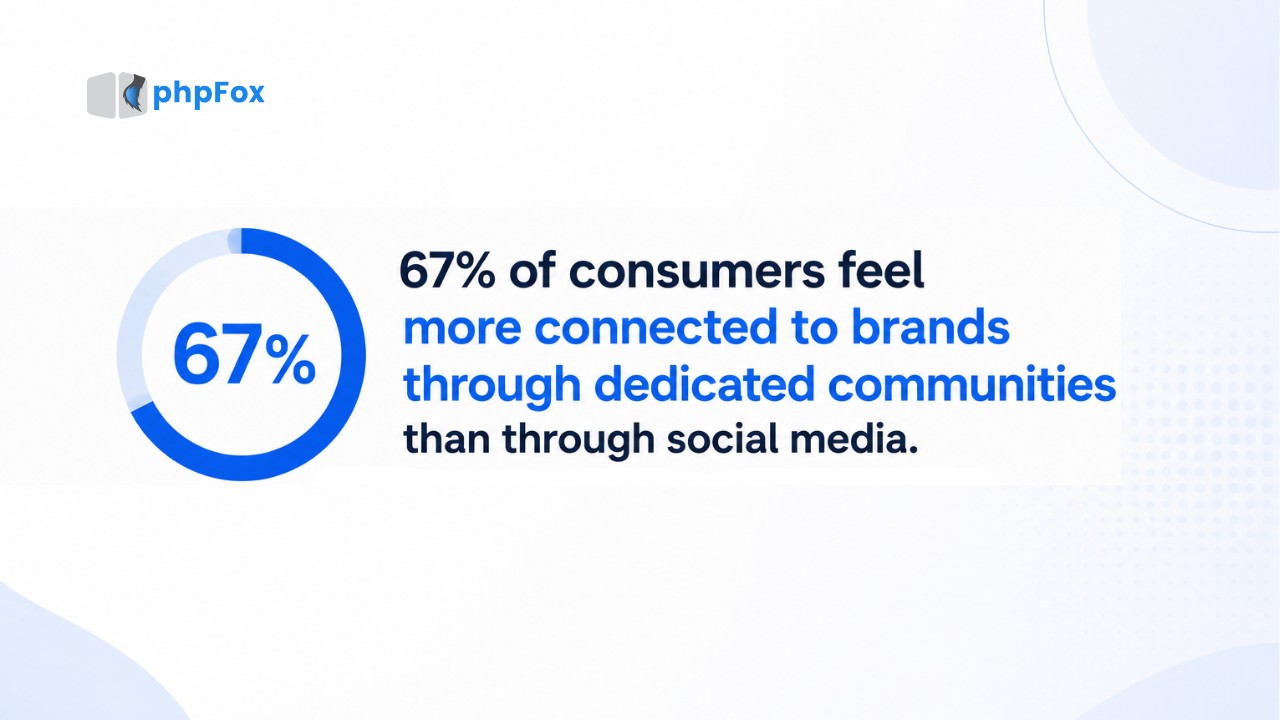
At the same time, consumers are placing greater value on meaningful interactions and trusted online spaces. A 2024 consumer survey found that 67% of consumers feel more connected to brands through dedicated communities than through social media channels. Unlike traditional social media, where content competes for attention in crowded feeds, branded communities provide a focused environment where people can connect around shared interests, experiences, and goals.
The business impact is becoming increasingly clear as well. According to the Higher Logic Community Benchmark Report, 57% of community members say that participating in a brand community makes them more loyal to that brand. This highlights how communities can strengthen long-term relationships in ways that traditional social platforms often struggle to achieve.
As a result, more businesses, creators, membership organizations, and community builders are investing in social networking software to create branded environments where they can own the experience, strengthen member relationships, and build sustainable community value over time.
Common Types of Social Networking Software
Not all social networking software is designed for the same purpose. Some platforms focus on helping people build personal connections, while others are built for professional networking, content sharing, community building, or internal collaboration.
Understanding the different types of social networking software can help you identify which solution best fits your goals and audience.
General Social Networks
General social networks are designed for broad public interaction. They allow users to create profiles, connect with friends, share updates, join groups, and engage with content across a wide range of interests.
Professional and Business Networks
Professional networking platforms help individuals and organizations build business relationships, discover career opportunities, share industry knowledge, and expand their professional networks.
Media-Sharing Platforms
These social networking platforms are centered around visual content, allowing users to share photos, videos, livestreams, and other media formats. Engagement typically revolves around content discovery and audience building.
Discussion Forums and Community Platforms
Discussion-based social networking software focuses on conversations, knowledge sharing, and community engagement rather than personal profiles or content broadcasting. These platforms are often organized around topics, interests, or niche communities.
Brand and Customer Communities
Many businesses use social networking software to create dedicated communities for customers, members, or brand advocates. These platforms help organizations strengthen customer relationships, gather feedback, provide support, and foster engagement beyond traditional social media.
Creator and Membership Communities
Creators, educators, coaches, and influencers increasingly use social networking software to build direct relationships with their audiences. These communities often combine exclusive content, memberships, courses, events, and discussions within a single platform.
Enterprise Social Networks (ESN)
Enterprise social networks are private platforms designed specifically for organizations. They help employees communicate, collaborate, share knowledge, and stay connected across departments and locations.
Private Social Networks
Private social networking software enables organizations to create fully branded, independent communities with complete control over the user experience, audience data, privacy settings, and monetization options.
While these categories help illustrate the different ways people connect online, many organizations today require more than just a single-purpose platform. As communities grow, it’s common to combine networking, content sharing, discussions, events, memberships, and community engagement within one ecosystem.
For example, an organization may combine customer engagement, member networking, content sharing, events, and private groups into one unified experience rather than managing separate tools for each function.
This is where flexible community platforms become especially valuable. Solutions like phpFox enable businesses, creators, membership organizations, and community builders to create a wide range of social networking experiences—from private social networks and brand communities to membership platforms and creator communities—all within a fully branded environment that they own and control.
Start Free Trial
Key Features to Look for in Social Networking Software
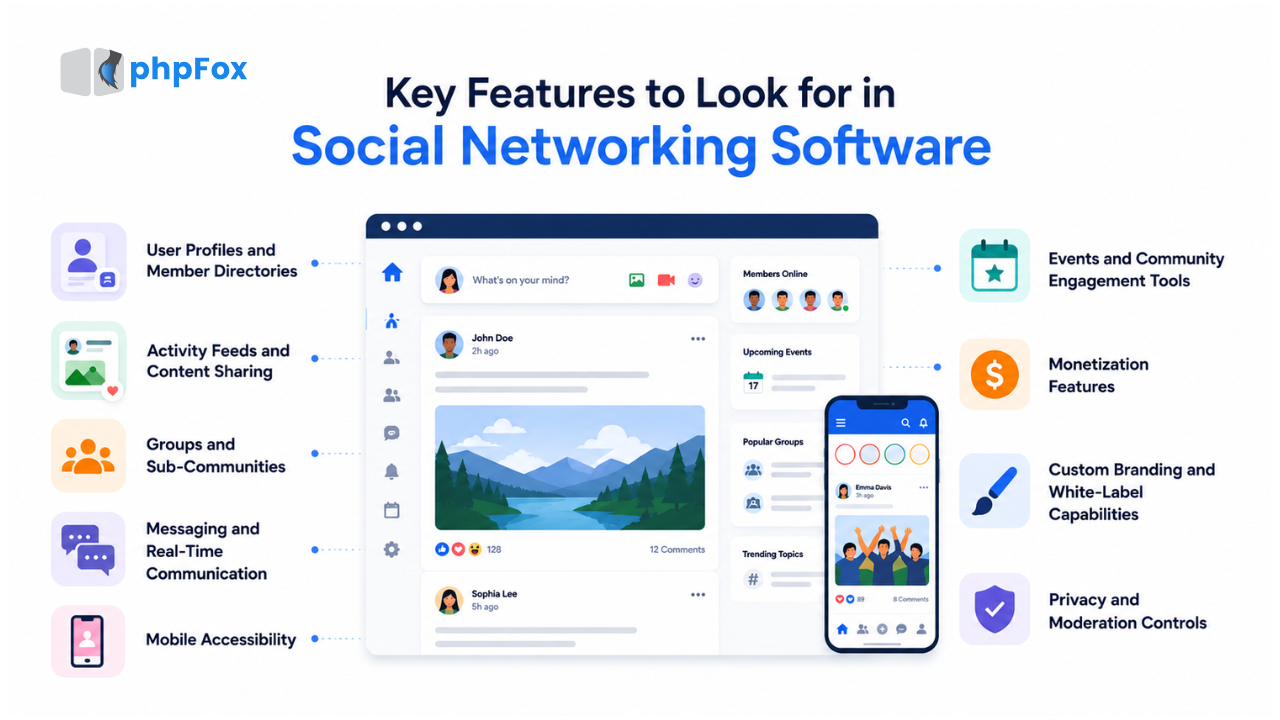
Not all social networking software offers the same capabilities. Some platforms are designed primarily for networking and discussions, while others provide a complete ecosystem for community building, content sharing, monetization, and member engagement.
When evaluating social networking software, consider the following features:
User Profiles and Member Directories
User profiles are the foundation of any social network. They allow members to introduce themselves, showcase their interests, and connect with others who share similar goals or experiences.
Member directories make it easier for users to discover relevant people, build relationships, and grow their professional or personal networks.
Activity Feeds and Content Sharing
A dynamic activity feed keeps members engaged by surfacing relevant updates, discussions, photos, videos, and announcements.
Content sharing features encourage participation and help transform passive members into active contributors.
Groups and Sub-Communities
As communities grow, members often want more focused spaces for discussion and collaboration.
Groups and sub-communities allow organizations to organize conversations around specific interests, topics, locations, or member segments while maintaining a unified community experience.
Messaging and Real-Time Communication
Private messaging, chat, and real-time communication tools help foster stronger relationships between members.
These features make communities feel more interactive and encourage ongoing engagement beyond public discussions.
Mobile Accessibility
With mobile usage continuing to grow, users increasingly expect community access from anywhere.
Look for social networking software that provides a mobile-responsive experience or dedicated mobile applications to keep members connected on the go.
Events and Community Engagement Tools
Events, livestreams, polls, reactions, and notifications help create ongoing opportunities for participation.
These engagement tools can significantly increase member activity and encourage users to return regularly.
Monetization Features
For creators, businesses, and membership organizations, monetization can be an important consideration.
Many modern social networking platforms support memberships, subscriptions, premium content, digital products, advertising, donations, or other revenue-generating opportunities.
Custom Branding and White-Label Capabilities
Organizations looking to build an independent community often want complete control over the user experience.
White-label social networking software allows you to customize branding, domain names, design elements, and member experiences so the community feels like an extension of your brand.
Privacy and Moderation Controls
As communities scale, effective moderation becomes increasingly important.
Look for software that provides flexible privacy settings, content moderation tools, user permissions, and community management capabilities to maintain a safe and welcoming environment.
Benefits of Using Social Networking Software
Building and managing a thriving online community can be challenging without the right tools. Social networking software provides the infrastructure organizations need to create meaningful interactions, strengthen relationships, and deliver long-term value to their audiences.
Whether you’re building a customer community, membership platform, private social network, or creator ecosystem, the right software can provide several key benefits.
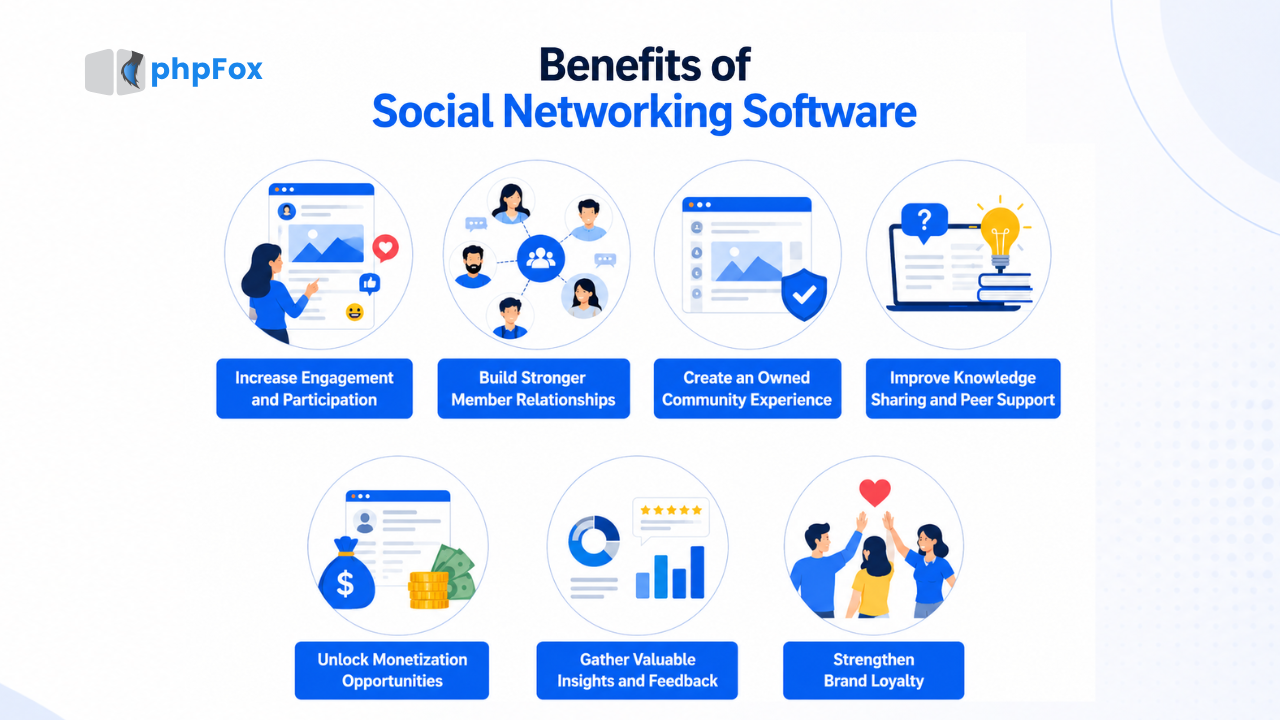
Increase Engagement and Participation
Social networking software encourages ongoing interaction through activity feeds, discussions, groups, messaging, events, and other engagement tools.
Instead of relying solely on email campaigns or occasional social media posts, organizations can create an active environment where members regularly participate, share ideas, and contribute valuable content.
Build Stronger Member Relationships
One of the biggest advantages of social networking software is its ability to foster direct relationships between members.
By creating opportunities for networking, collaboration, and peer-to-peer conversations, organizations can build stronger communities that keep people engaged over time.
Create an Owned Community Experience
Unlike traditional social media platforms, social networking software allows organizations to create and manage their own branded environment.
This provides greater control over the user experience, community rules, audience data, and long-term growth strategy without being heavily dependent on third-party algorithms.
Improve Knowledge Sharing and Peer Support
Communities often become valuable knowledge hubs where members can ask questions, exchange ideas, and learn from one another.
This collective knowledge sharing can improve customer satisfaction, reduce support workloads, and increase the overall value of the community.
Unlock Monetization Opportunities
Many organizations use social networking software to generate revenue through memberships, subscriptions, premium content, online courses, sponsorships, advertising, or virtual events.
By bringing audiences together within a dedicated platform, organizations can create new opportunities for sustainable growth.
Gather Valuable Insights and Feedback
Community interactions provide a direct window into what members care about most.
Organizations can identify emerging trends, collect product feedback, understand audience needs, and make more informed business decisions based on real conversations happening within the community.
Strengthen Brand Loyalty
Communities create a sense of belonging that is difficult to replicate through traditional marketing channels.
In fact, the Higher Logic Community Benchmark Report found that 57% of community members say their participation in a brand community increases their loyalty to that brand.
As members build relationships with both the organization and each other, they become more likely to remain engaged, advocate for the brand, and contribute to long-term community growth.
How to Choose the Right Social Networking Software
With so many social networking software solutions available today, choosing the right platform can feel overwhelming. The best option ultimately depends on your goals, audience, business model, and long-term growth plans.
When evaluating different platforms, consider the following questions:
With so many social networking software solutions available today, choosing the right platform starts with understanding your audience, your business goals, and the type of experience you want to create.
Rather than trying to support every possible use case, focus on the platform that best aligns with your community strategy and long-term vision.
1. Identify Your Target Audience
Different audiences have different expectations when it comes to online communities and social networking experiences.
Consider who you’re trying to serve:
- Professionals and B2B audiences often value networking opportunities, industry discussions, knowledge sharing, and professional development.
- Customers and brand followers may be looking for support, product updates, exclusive content, and opportunities to connect with like-minded users.
- Creators and educators typically need tools for memberships, content delivery, audience engagement, and monetization.
- Specialized interest communities often require greater privacy, moderation controls, and customization than mainstream social platforms can provide.
Understanding your audience’s needs is the first step toward choosing the right social networking software.
2. Align With Your Core Goals
Before evaluating platforms, define what success looks like for your organization.
Different social networking software solutions are optimized for different outcomes:
- Building a brand community and strengthening customer loyalty
- Creating a membership-based organization
- Supporting networking and professional connections
- Launching a private social network
- Growing a creator or subscription-based community
- Improving internal communication and collaboration
Choosing software that aligns with your primary objective will help you avoid unnecessary complexity and focus on what matters most.
3. Consider the Type of Content You’ll Create
The content experience you want to deliver should influence your platform selection.
For example:
- Communities built around discussions and knowledge sharing may prioritize forums, groups, and community conversations.
- Creator-focused communities often require video content, livestreaming, courses, and premium content delivery.
- Membership organizations may benefit from events, resource libraries, networking tools, and member directories.
- Brand communities often need a mix of content sharing, customer engagement, and user-generated content.
The best social networking software should support the content formats your audience naturally wants to consume and contribute.
4. Decide How Much Ownership and Control You Need
One of the biggest differences between traditional social media platforms and dedicated social networking software is ownership.
If your long-term strategy includes building a branded community, owning member relationships, controlling audience data, and creating independent revenue streams, look for software that offers:
- White-label branding
- Custom domains
- Flexible privacy settings
- Mobile apps
- Membership management
- Monetization capabilities
These features can help you build an owned community rather than relying entirely on third-party platforms.
5. Think Long-Term
The platform you choose today should still support your community as it grows.
Look for social networking software that can scale with increasing member activity, support new engagement initiatives, and adapt as your business evolves.
The most successful communities are rarely built overnight. Choosing a flexible platform that can grow alongside your audience will help create a stronger foundation for long-term success.
Final Thoughts
Social networking software has evolved far beyond traditional social media platforms. Today, organizations use these platforms to create branded digital experiences where members can connect, collaborate, share knowledge, and build meaningful relationships around a common purpose.
Whether you’re launching a customer community, membership platform, creator network, brand community, or private social network, choosing the right software can significantly impact your long-term growth and engagement. The best solution isn’t necessarily the one with the most features—it’s the one that aligns with your audience, supports your goals, and gives you the flexibility to grow over time.
As more businesses seek greater ownership over their communities, audience data, and member experiences, platforms like phpFox continue to stand out as a powerful and flexible solution. With support for branded communities, private social networks, memberships, mobile apps, monetization, and extensive customization options, phpFox provides the tools organizations need to build and scale thriving online communities.
If you’re ready to create your own social network or community platform, there’s no better way to evaluate a solution than experiencing it firsthand.
Start your free phpFox trial today and discover how easy it is to build a social networking platform that’s truly your own.