Your association sends the newsletter every month. You run the annual conference and post updates on social media religiously. But renewal rates keep sliding anyway.
That’s usually not an effort problem. It’s a structural problem. Every touchpoint you create — the email, the event, the social post — lives and dies on its own, with nothing to hold it together. A community engagement platform is what fixes that: a dedicated space where members actually gather, talk, and keep coming back, instead of interacting with your organization once a month and forgetting about it in between.
Below, we’ll walk through what a community engagement platform actually is, why it moves the needle on retention more than almost anything else in your tech stack, and the seven features worth paying attention to before you buy one.
What Is a Community Engagement Platform?
A community engagement platform is specialized software that gives your members, customers, or audience a centralized online space to connect and interact with each other
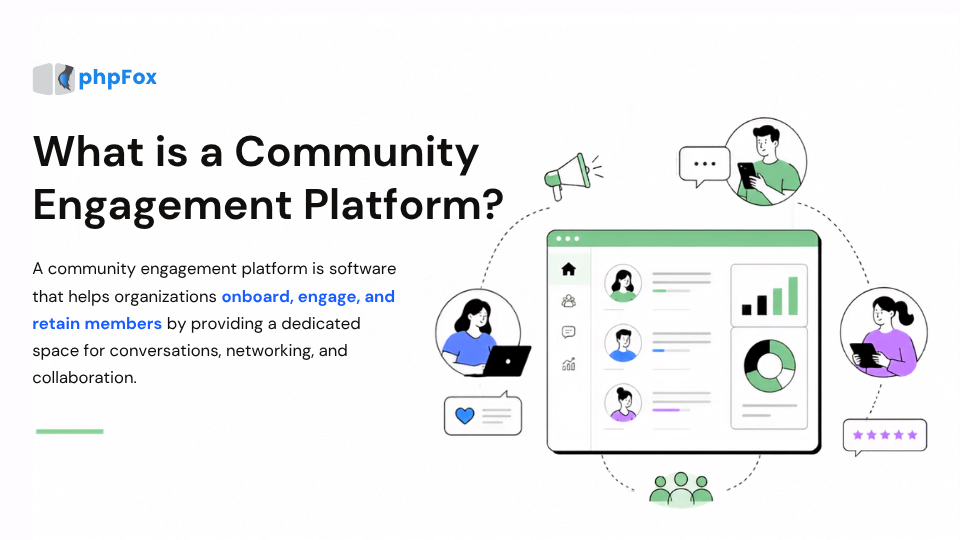
Community engagement platforms are sometimes referred to as customer community platforms or community management software. While the names may vary, they all share the same goal: helping organizations create meaningful member relationships that increase participation, strengthen loyalty, and improve long-term retention.
Unlike an Association Management System (AMS), which manages administrative tasks like renewals, payments, and registrations, a community platform helps members interact with each other. It creates a space where conversations continue, relationships grow, and members keep coming back—not because they have to, but because they find value in being part of the community.
If you’re looking for a community platform to onboard and engage your customers, members, or clients, phpFox is worth exploring.

Why Member Retention Actually Depends on Community Engagement
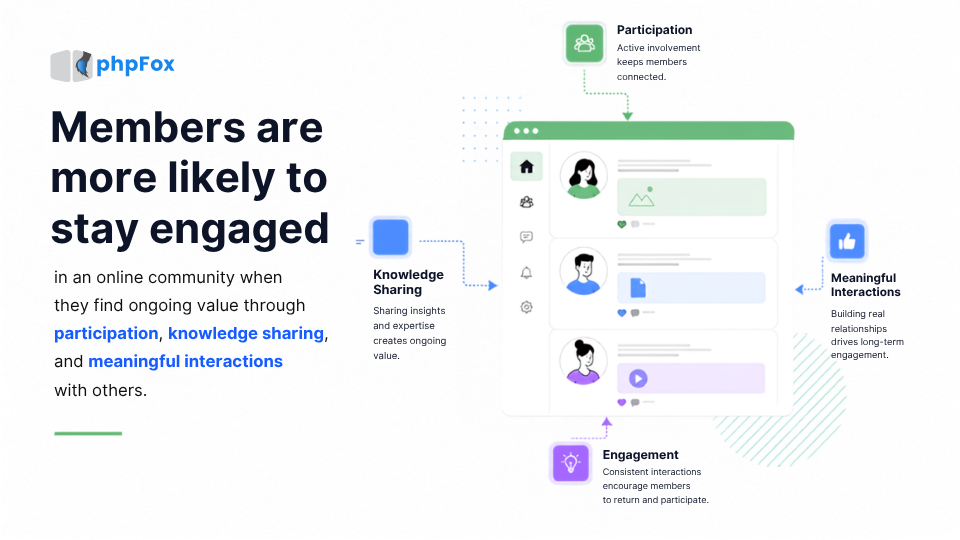
The secret isn’t sending more emails—it’s creating two-way interactions.
Think about two members. The first receives your newsletter, reads it quickly, and moves on. The second logs into your community, joins a discussion, gets answers to their questions, and connects with people who share similar interests. A few days later, they return to reply to comments, join another conversation, or discover something new.
The difference is simple: the first interaction ends when the email is closed, while the second starts an ongoing conversation. Every reply, comment, or discussion gives members another reason to come back.
This is exactly what a community engagement platform enables. Instead of one-way communication, it creates continuous two-way interactions by giving members a dedicated place to ask questions, share knowledge, exchange ideas, and build relationships. These ongoing interactions are what keep members engaged long after they sign up.
Why Enterprises and Organizations Need a Community Engagement Platform
Every organization communicates with its audience—but communication alone doesn’t build engagement.
Most organizations rely on emails, newsletters, webinars, or social media to stay connected with members and customers. While these channels are effective for broadcasting information, they rarely create meaningful conversations. Once an email is read or an event ends, the interaction often stops.
A community engagement platform changes that by creating a dedicated space where conversations continue long after the initial touchpoint. Members can ask questions, share experiences, exchange knowledge, and support one another in one central place. Instead of relying solely on one-way communication, organizations foster ongoing, two-way interactions that strengthen relationships over time.
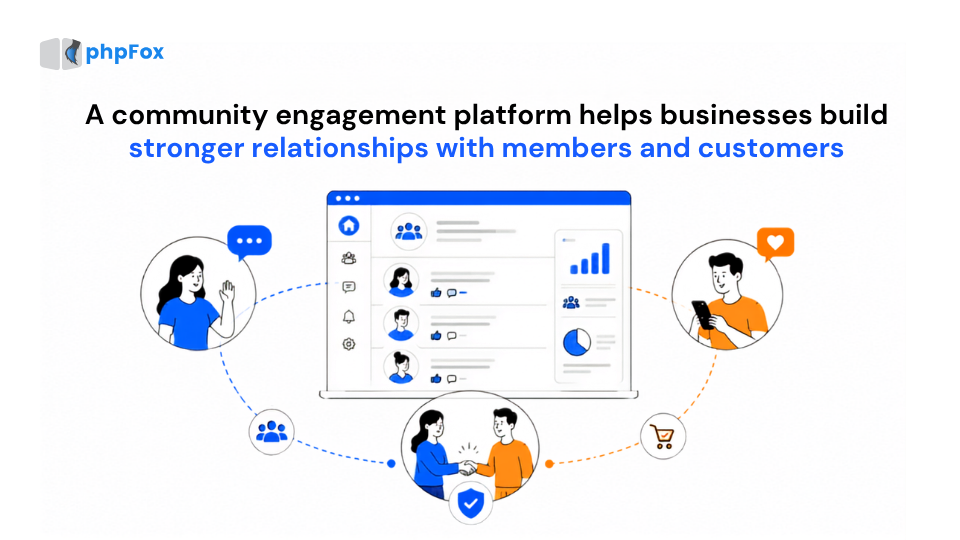
For organizations, the benefits go beyond engagement. An active community helps increase member retention, encourages knowledge sharing, reduces repetitive support requests, and provides valuable insights into what members truly need. It also creates a stronger sense of belonging—giving people a reason to return, participate, and remain connected to the organization.
Whether you’re a professional association, nonprofit, healthcare organization, university, or enterprise, a community engagement platform helps transform one-time interactions into lasting relationships that drive long-term engagement and organizational growth.
7 Essential Features of a Community Engagement Platform
A successful community isn’t built by simply giving members a place to log in. It’s built by giving them reasons to participate, connect, and return. The right community engagement platform should provide features that encourage ongoing interaction rather than one-time visits.
1. Discussion Forums That Encourage Conversations
Every thriving community starts with conversations.
Discussion forums give members a place to ask questions, exchange ideas, and help one another. Unlike email or social media posts that quickly disappear, discussions remain searchable and continue growing as more members contribute.
The more conversations members participate in, the more reasons they have to return.
2. Rich Member Profiles
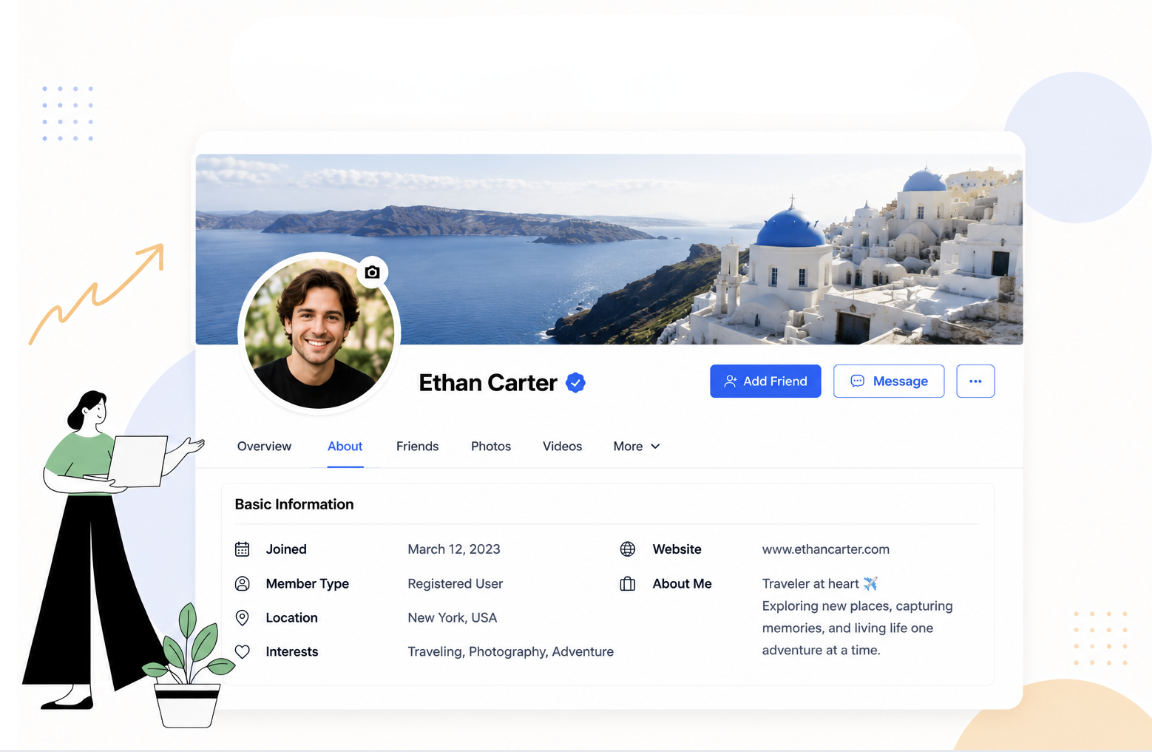
People don’t join communities just to consume content—they join to connect with people.
A searchable member directory helps users discover others based on industry, expertise, interests, or location. Rich member profiles make networking easier by allowing members to learn about each other before starting a conversation.
For many professional associations and member organizations, these connections become one of the biggest reasons members continue renewing their membership.
3. Groups for Shared Interests
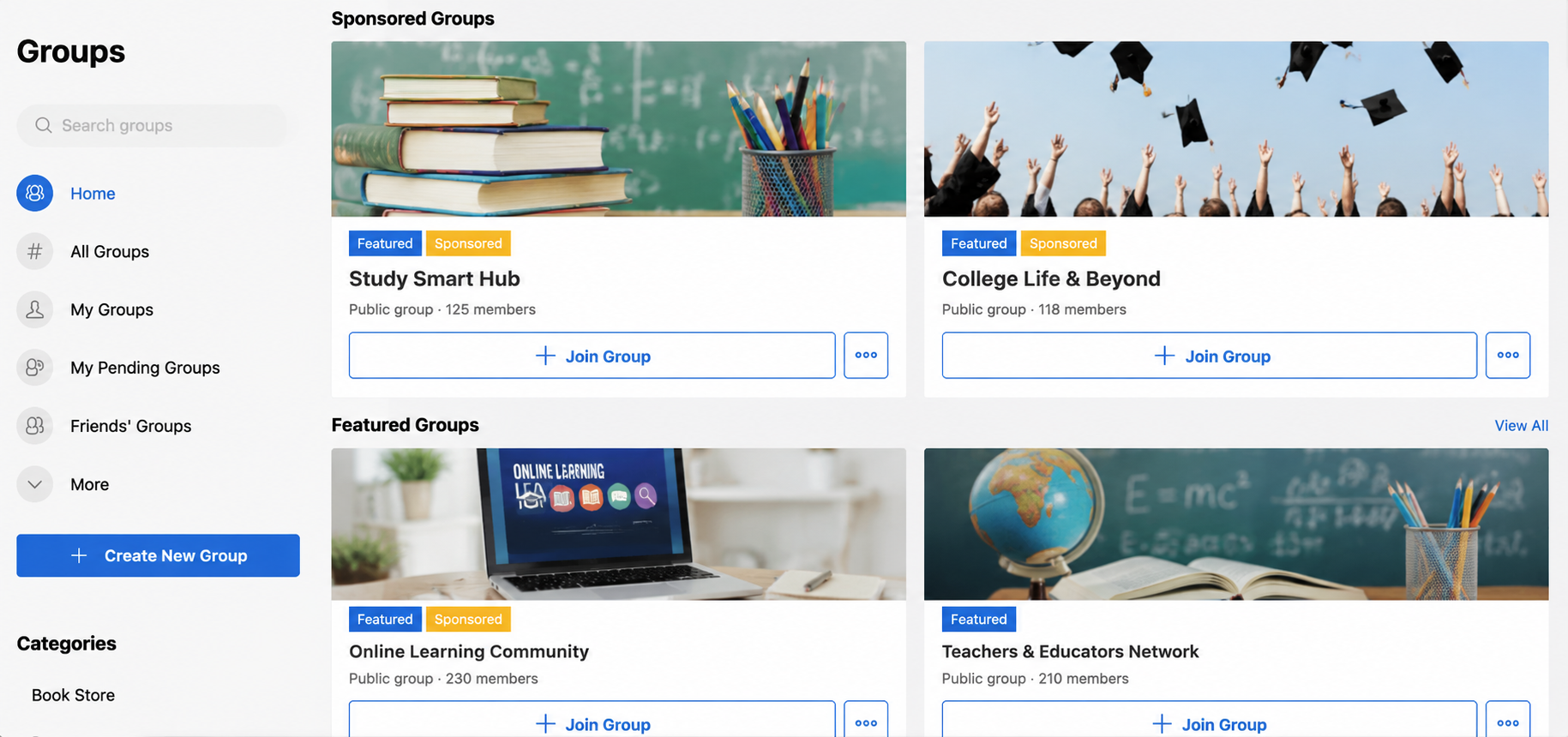
Not every conversation belongs in one large community.
Groups allow members to organize around shared interests, projects, departments, industries, or local chapters. Smaller communities create more relevant discussions and help members feel like they belong.
Instead of managing dozens of disconnected communication channels, organizations can keep every discussion in one centralized platform.
4. Events That Keep Members Engaged
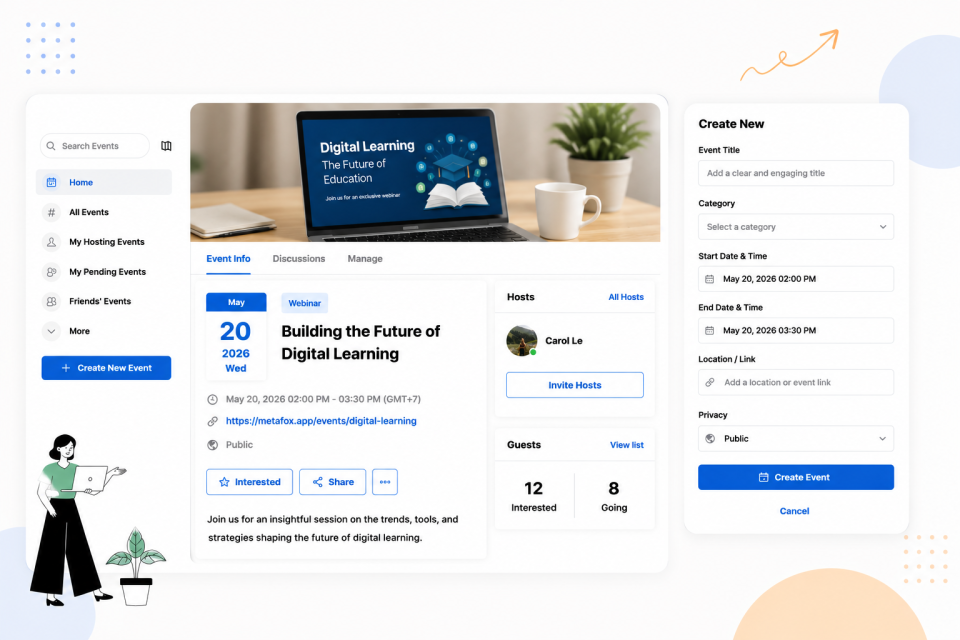
Events bring people together—but engagement shouldn’t end when the event does.
A community platform connects event registration, reminders, discussions, and post-event conversations in one place. Members can continue asking questions, sharing resources, and networking long after the event is over.
Instead of becoming a one-day activity, every event becomes an opportunity to strengthen the community.
5. Knowledge Sharing and Resource Libraries
One of the biggest advantages of an online community is that valuable knowledge doesn’t disappear.
Members can share documents, best practices, FAQs, recordings, and discussions that remain searchable for future members. Over time, the community becomes a living knowledge base that reduces repetitive questions and helps members find answers faster.
6. Notifications That Bring Members Back
Even the best community won’t stay active if members forget it exists.
Smart notifications keep members informed whenever someone replies to their post, mentions them, comments on a discussion, or announces a new event. These timely reminders encourage members to return naturally and continue participating in conversations.
Instead of relying solely on newsletters, organizations maintain continuous engagement through personalized notifications.
7. Full Branding and Platform Ownership
Most comparison lists skip this one, because it’s often the feature that matters most a few years in. A typical SaaS community engagement platform rents you space on shared infrastructure — your community lives on someone else’s servers, under someone else’s terms of service, with your branding limited to swapping in a logo.
A self-hosted platform flips that arrangement: your organization owns the platform, the member data, the branding, and the mobile app outright. You won’t notice the difference in a sales demo. You’ll notice it the day a vendor changes their pricing overnight, sunsets a feature you depend on, or gets acquired by someone with different priorities — and your community’s future stops being fully yours to decide.
How to Choose the Right Community Engagement Platform for Your Organization
Choosing a community engagement platform isn’t just about comparing features. It’s about finding a platform that fits the way your organization plans to grow its community over the next several years.
Before making a decision, ask yourself a few important questions.
1. What problem are you trying to solve?
Are you looking to improve member retention? Increase networking? Build a knowledge-sharing community? Reduce support requests? Different goals require different capabilities, so start with the outcome—not the feature list.
2. Will your members actually use it?
The best community platform is one that members enjoy returning to. Look for an intuitive user experience, simple navigation, mobile accessibility, and features that encourage ongoing conversations instead of one-time visits.
3. How much control do you need?
Some organizations are happy with an out-of-the-box SaaS solution that requires little maintenance. Others want complete control over branding, customization, integrations, and member data.
If your community is a long-term strategic asset, ownership may become more important than convenience.
4. Can the platform grow with your organization?
Your needs today may look very different two or three years from now.
Consider whether the platform can support more members, additional communities, custom workflows, new integrations, and changing business requirements without forcing you to migrate again later.
5. What’s the real cost over time?
Pricing isn’t just about the monthly subscription.
Think about implementation, customization, user limits, additional modules, and how costs may increase as your community grows. Sometimes a lower upfront price can become more expensive in the long run.
6. Do you need flexibility in the future?
Your community strategy will evolve.
Choose a platform that allows you to customize workflows, integrate with your existing systems, and adapt as member expectations change. Flexibility today often saves significant time and cost later. Ultimately, the right platform depends on your organization’s priorities.
If you need a solution that’s quick to launch with minimal setup, a SaaS platform may be the right fit.
If your community is a core part of your long-term strategy—and you want full ownership of your data, branding, and platform—a self-hosted solution like phpFox offers greater flexibility and control as your community grows.
FAQs
What’s the difference between a community engagement platform and social media?
Social media is designed to grow your audience. A community engagement platform is designed to engage and retain it.
Instead of relying on algorithms and one-way updates, community platforms create a space for ongoing conversations, collaboration, and relationship building.
Do community engagement platforms work for small organizations?
Yes, and community size matters less than you’d think. What matters is whether members actually have a reason to interact. A small association with 200 genuinely engaged members will get more out of a community engagement platform than a large one where most people never bother to log in.
Is a self-hosted community platform harder to maintain than SaaS?
It takes more setup upfront and sometimes technical support for hosting. In exchange, you’re not locked into a vendor’s pricing changes or feature removals down the line, and you keep full control of member data for as long as you run the platform.
How much does a community engagement platform cost?
SaaS platforms typically run anywhere from a few hundred to several thousand dollars a month, depending on member count. Self-hosted, license-based platforms usually involve a higher one-time cost with little to no recurring fee — which often works out cheaper for organizations planning to run their community for years, not months.
Final Thoughts
A successful community isn’t built through one-way communication—it’s built through ongoing participation. The right community engagement platform gives people a place to connect, share knowledge, and contribute, creating lasting value for both members and the organizations they belong to.
Whether you’re a membership organization increasing member engagement or a B2B company supporting customers throughout their journey, choosing the right community engagement platform is an investment that delivers long-term value.
Explore how phpFox helps organizations create fully branded, self-hosted communities that grow alongside their business.