It’s no secret that Facebook Groups, LinkedIn, Slack, and Discord have become the go-to platforms for organizations looking to build online communities. But as these platforms continue to evolve, more organizations are beginning to realize the trade-offs that come with building on someone else’s platform.
Private social networking software has become an increasingly popular alternative for organizations that want more control over their brand, member experience, and community data. And since choosing the right platform can feel overwhelming, we’ve got you covered.
In this guide, we’re going to break down everything you need to know about private social networking software—from why organizations are making the switch to the key features to look for and how to choose the right platform for your community.
What Is a Private Social Network?
A private social network software is an online community that only invited, registered, or approved members can access. Unlike public social media, conversations, content, and member information stay inside your own community—not where anyone can view or join.
Members can create profiles, post updates, join groups, send messages, attend events, and interact with others just like they would on Facebook or LinkedIn.
The difference is privacy and ownership.
Instead of building your community on a third-party platform, you’re creating a space that your organization controls—from the branding and member experience to the data, privacy settings, and community rules.
Top 8 Reasons Organizations Choose Private Social Networking Software
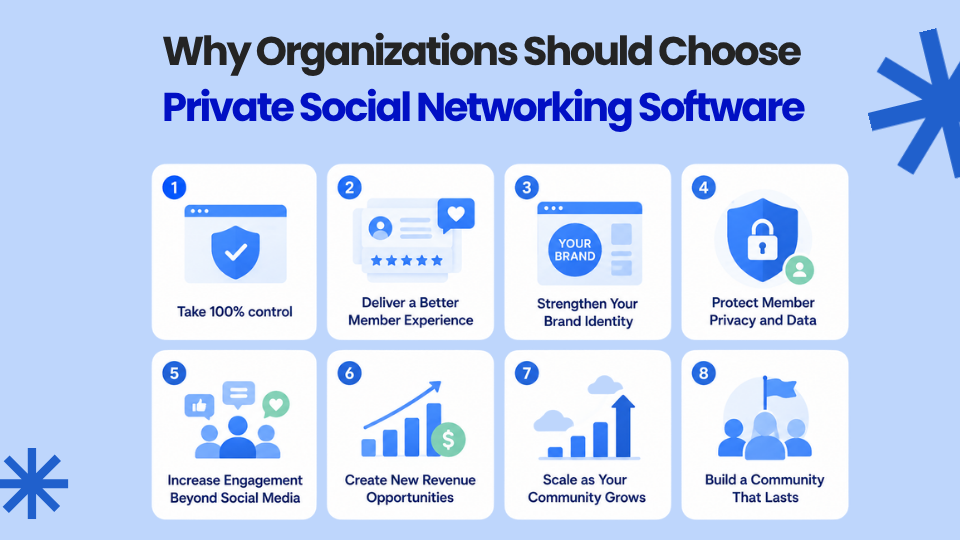
1. Own Your Community, Not Just Your Audience
Growing a community takes time and effort. But when that community lives on a public platform, you never truly own it.
Your members interact under someone else’s brand, your reach depends on changing algorithms, and your community is always subject to platform policies.
With a private social network, your organization owns the experience—from branding and member data to the rules that shape how your community grows.
2. Deliver a Better Member Experience
People don’t want to jump between Facebook Groups, email threads, Zoom links, and shared drives just to stay connected.
A private social network brings everything into one place. Members can discover discussions, join groups, register for events, access resources, and connect without switching between multiple platforms.
The result is a simpler, more engaging experience that keeps members coming back.
3. Strengthen Your Brand Identity
When members log in, they should feel like they’re entering your community—not Facebook’s or another platform’s.
With a private social network, your branding is front and center. From your logo and domain to your colors, and even a white-label mobile app on some platforms, every touchpoint reflects your brand and organization.

4. Protect Member Privacy and Data
For many organizations, privacy isn’t just a preference—it’s a requirement.
Whether you’re managing employee discussions, patient communities, professional associations, or paid memberships, sensitive conversations should happen in a secure environment you control.
A private social network gives you greater control over member access, permissions, moderation, and data ownership.
5. Increase Engagement Beyond Social Media
Public social media is designed to keep users scrolling—not necessarily engaged with your community.
Competing posts, advertisements, and endless notifications constantly pull attention away.
A dedicated community gives members a reason to return because every discussion, event, and piece of content is relevant to them.
6. Create New Revenue Opportunities
A community can become more than an engagement channel—it can become a business asset.
Many organizations monetize their communities through: Paid memberships, Exclusive content, Online courses, Events and webinars, Sponsorships.
Instead of sharing revenue with third-party platforms, you decide how your community creates value.
7. Scale as Your Community Grows
What works for 100 members doesn’t always work for 10,000.
As communities expand, organizations need better moderation tools, flexible member roles, advanced permissions, analytics, and automation to manage growth efficiently.
Private social networking software is designed to grow alongside your community instead of forcing you to migrate later.
8. Build a Community That Lasts
Social platforms come and go. Algorithms change. Features disappear.
Your community shouldn’t depend on decisions made by another company.
With a private social network, you’re building a long-term digital home that belongs to your organization. You decide how it evolves, how members interact, and what the future of your community looks like.
How to Create a Private Social Network in 5 Steps
Step 1: Define Your Ideal Members
Before choosing a platform or inviting people to join, take time to identify who your private social network is actually for.
Your ideal members are the people who will gain the most value from your community and actively contribute to its growth. Depending on your organization, they could be customers looking for product support, employees collaborating across teams, association members sharing industry knowledge, students connecting with alumni, or partners working toward common goals.
Ask yourself a few questions before getting started:
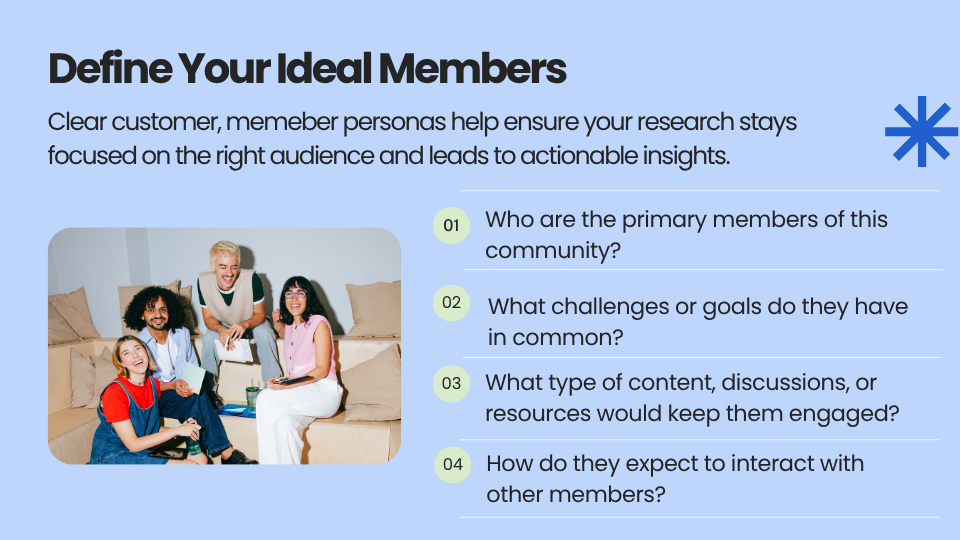
- Who are the primary members of this community?
- What challenges or goals do they have in common?
- Why would they choose a private community instead of Facebook Groups or other public platforms?
- What type of content, discussions, or resources would keep them engaged?
- How do they expect to interact with other members?
The clearer you are about your target audience, the easier it becomes to design a community experience that feels relevant and valuable. Instead of trying to build a space for everyone, focus on serving the people who are most likely to participate, contribute, and stay engaged over the long term.
Step 2: Define Your Community Goals
Once you know who your community is for, the next step is to define what success looks like.
Every private social network serves a different purpose. Some organizations want to improve customer support, while others focus on employee collaboration, member engagement, professional networking, or knowledge sharing. Setting clear goals early helps you choose the right features, organize your community effectively, and measure its success over time.
Ask yourself:
- What problems should this community solve?
- What value will members gain by joining?
- How will you measure success, such as active members, engagement, retention, or customer satisfaction?
Clear objectives provide direction for every decision you make as your community grows.
Step 3: Choose the Right Private Social Networking Software
Today, there are countless community platforms available, each designed for different audiences and use cases. Some focus on online courses, others prioritize internal collaboration, while some are built specifically for branded communities and membership organizations.
Instead of choosing a platform based on popularity, focus on whether it can support your organization’s long-term growth. Look for a private social networking software solution that gives you the flexibility to create a community that reflects your brand and evolves with your members’ needs.
Here are a few essential features to consider:
- Complete branding and white-label customization
- Flexible content formats, including posts, groups, events, blogs, and videos
- Built-in community management and member engagement tools
- Strong privacy and permission controls
- Native mobile apps that deliver a familiar social networking experience
- The ability to scale as your community grows
If you’re looking for a platform that combines all of these capabilities, phpFox helps organizations build fully branded private communities with complete ownership of their data, branding, and member experience.
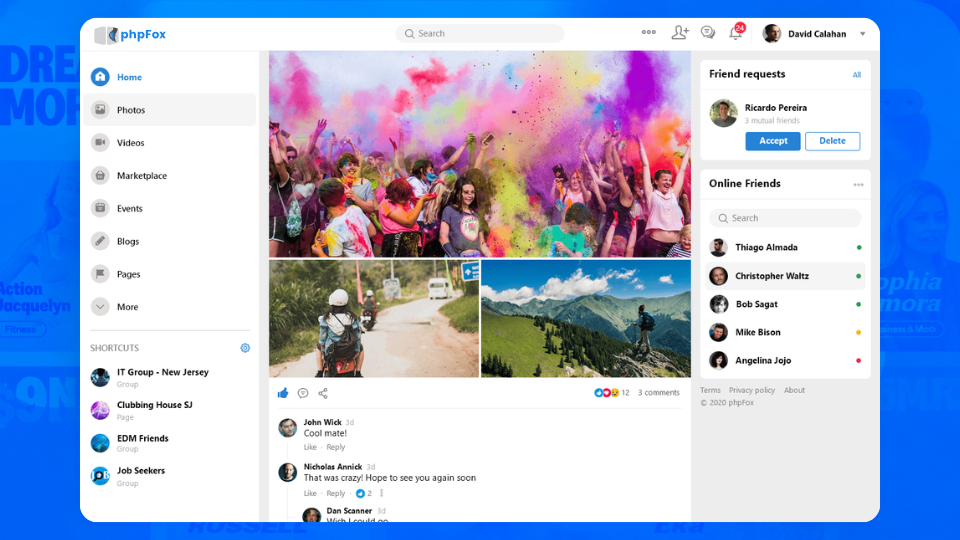
👉 Start your free trial and let phpFox help you build your private community

Read more: Top 7 Social Networking Software for Businesses in 2026
4. Invite Members and Encourage Early Engagement
A successful community starts with active participation. Invite your first members through email campaigns, existing customer lists, or internal communication channels.
Welcome new members with onboarding guides, discussion prompts, exclusive content, or virtual events to encourage conversations from the beginning. The more value members experience early on, the more likely they are to return regularly.
5. Monitor, Improve, and Scale Your Community
Launching your community is only the beginning. Track member activity, engagement levels, popular discussions, and community growth to understand what’s working.
As your community evolves, continue introducing new content, features, and engagement initiatives based on member feedback. A thriving private social network grows through continuous improvement rather than a one-time launch.
Ready to start building your private social network?
At phpFox, we believe your community should be considered as your business asset.
phpFox gives you everything you need to build a private social network to onboard and build a lasting relationship with your members and customers. With over 35 built-in social apps, you can combine activity feeds, groups, messaging, events, online courses, marketplaces, blogs, forums, and more into a single community experience—without relying on multiple tools.
Your members can stay connected wherever they are through fully branded native mobile apps for iOS and Android, delivering the same seamless experience across web and mobile.
As your community grows, phpFox grows with you. Monetize with memberships, digital products, or premium content, customize every aspect of your platform, and expand your community without giving up ownership of your brand or member data.