Most people don’t think about community data ownership when they start building a community — they focus on growth, engagement, and getting more people, which makes sense in the beginning because that’s what feels visible and rewarding. But as the community grows, something less obvious starts to matter a lot more: who actually owns the data behind it.
Because the truth is, when you build your community on someone else’s platform, you may be able to see your members, interact with them, and even grow your audience, but you don’t really control the data that makes your community valuable in the long run. And that includes not just basic information like user profiles, but also behavior, interactions, and everything that helps you understand and serve your members better.
This is where the idea of community data ownership becomes important — not as a technical concept, but as a strategic one.
1. What Is Community Data Ownership?
At its core, community data ownership simply means that you have full control over the data generated within your community — including who your members are, how they interact, what content they engage with, and how that information is stored and used.
It’s closely tied to the concept of data sovereignty, which refers to your ability to decide where your data lives, who has access to it, and how it can be used, without being dependent on third-party platforms or external systems.
In practice, this goes far beyond just having access to a dashboard or analytics. True ownership means you’re not restricted by platform limitations, you’re not at risk of losing access due to policy changes, and you’re not forced to operate within rules that don’t align with how you want to build and grow your community.
When you have full community data control, your community stops being just a place where people gather, and starts becoming a real asset — something you can understand deeply, optimize continuously, and grow on your own terms.
2. SaaS vs Self-Hosted: Who Really Controls Your Data?
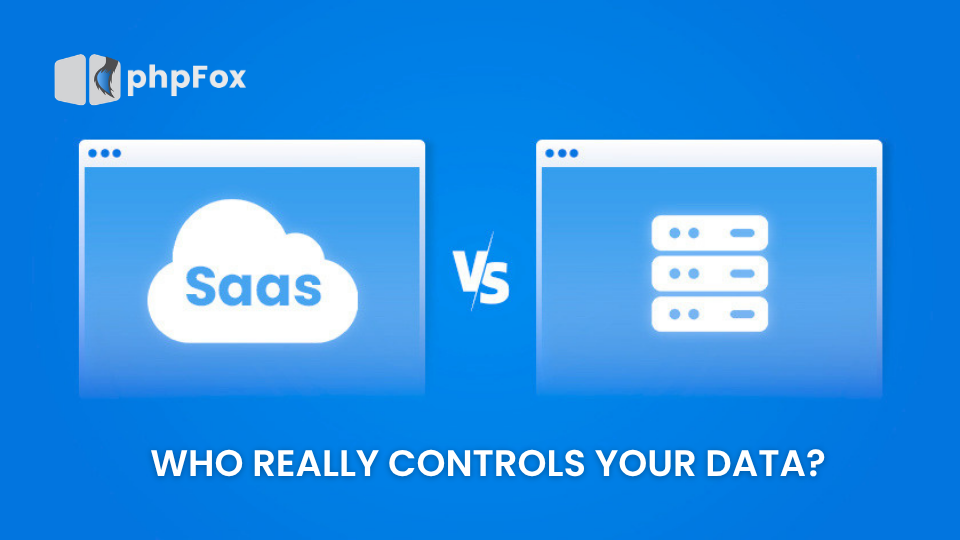
Once you start thinking seriously about community data ownership, the next question becomes unavoidable: where is your data actually stored, and who really controls it?
This is where the difference between SaaS platforms and a self-hosted community platform becomes very clear. https://www.phpfox.com/blog/2025/on-premise-social-networks-for-enterprise/
With most SaaS solutions like Mighty Networks, everything is designed for convenience. You sign up, your community is ready in minutes, and the platform takes care of hosting, updates, and infrastructure. But in exchange for that simplicity, you’re also placing your entire community — including your data — inside a system you don’t control. Your members, their activity, and the insights you rely on all live on someone else’s servers, governed by their policies, their limitations, and their long-term decisions.
And while this might not feel like a problem early on, it becomes one as soon as your community starts to grow.
In contrast, a self-hosted community platform shifts that dynamic entirely.
Instead of relying on a third-party system, you control where your data lives, how it’s structured, and how it can be used. You’re not dependent on feature limitations, pricing changes, or policies that can impact how your community operates. More importantly, you gain a level of platform independence that allows your community to grow without being constrained by external factors.
This doesn’t mean self-hosted is just a technical choice — it’s a strategic one.
Because in the long run, the question isn’t just “which platform is easier to start with,” but “which platform allows me to truly own and scale what I’m building.”
And for anyone who sees their community as more than just a side project — as something that can evolve into a real, sustainable asset — that distinction matters more than ever.
3. Data Ownership = Business Assets
Once you start thinking about data ownership, it becomes clear that data isn’t just something you collect — it directly shapes how your community grows.
Every interaction gives you insight into what your members care about and how they engage, and with full community data control, you can actually use those insights to improve the experience, increase retention, and make smarter decisions.
That’s what turns a community into a real business asset. Explore why a self-hosted community platform is the ultimate choice for enterprise success.
When you own your data, you can personalize experiences, understand what drives engagement, and build monetization strategies that truly fit your audience — instead of relying on guesswork.
But when your data lives on someone else’s platform, all of this becomes limited.
In the end, owning your data isn’t just about control — it’s about what you’re able to do with it.
4. Why Self-Hosted Community Platforms Win
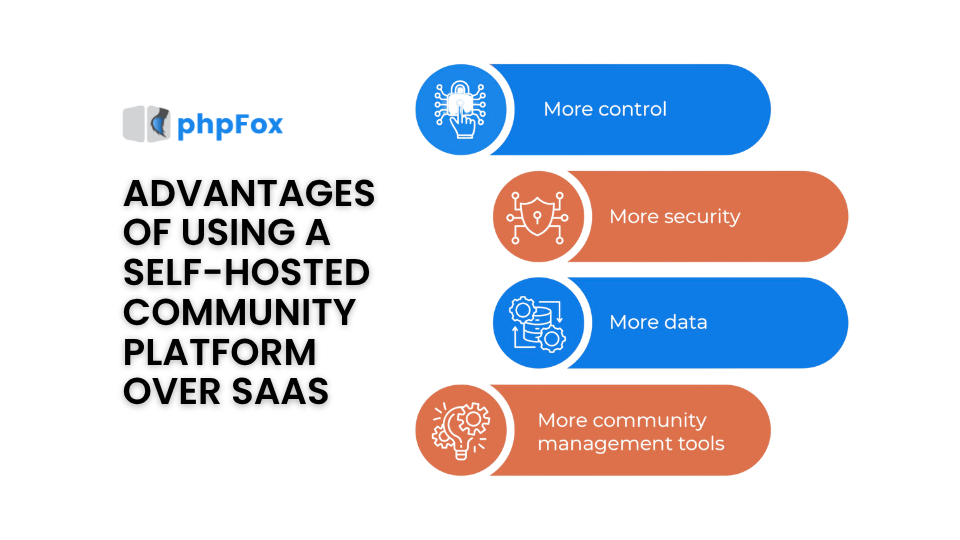
As your community grows, the limitations of SaaS platforms become harder to ignore. You may not notice it at first, but over time, restrictions on customization, monetization, and data access start to affect how you operate and scale.
With a self-hosted community platform like phpFox, you’re not working around someone else’s system anymore. You control how your platform works, how your data is used, and how your community evolves.
That level of control also means platform independence — you’re not tied to pricing changes, feature limitations, or decisions made by a third party. As your community grows, your platform grows with you, instead of holding you back.
In the long run, the difference is simple: one option gives you convenience, the other gives you control — and control is what allows you to build something that lasts.
Conclusion: Own Your Data, Own Your Community
At the end of the day, your community’s value doesn’t just come from how many members you have — it comes from how well you understand and control the data behind it.
If you don’t have community data ownership, you’re limited in how you grow, engage, and monetize. You’re relying on systems that weren’t built for your long-term success.
But when you own your data, everything changes. You gain clarity, control, and the ability to build something that actually scales with you.
Take control of your community data and start building a platform you truly own.