If you’re looking to build an online community, you’re not alone. More businesses, creators, coaches, and brands are investing in community platforms as a way to build stronger relationships, increase engagement, and create a more sustainable audience beyond social media.
But building a successful online community involves more than simply launching a Facebook Group or opening a Discord server. The most successful communities are built around a clear niche, the right online community platform, and an experience that keeps members engaged over time.
Many people start with the same questions: what kind of community should they build, which platform should they choose, and how do they actually attract and retain active members?
In this guide, we’ll walk through the key steps to successfully build an online community, from defining your niche and choosing the right platform to customizing your community experience and launching for long-term growth.
1. What is an online community?
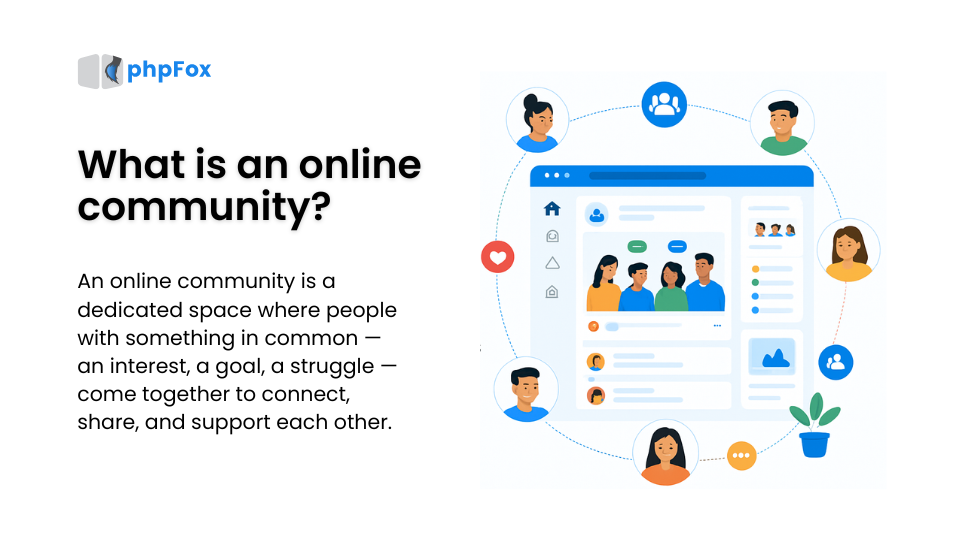 An online community is a dedicated space where people with shared interests come together to connect, share, and grow — around a brand, a niche, or a common goal. And the numbers back it up: 80% of brands that run communities say it has a positive impact on their business and helps them achieve their goals. That’s not a coincidence — it’s what happens when you give people a place where they truly find meaningful conversation and authentic interactions
2. 7 steps to build an online community
Step 1: Define Your Niche and Community Purpose
The first step to successfully build an online community is choosing a clear niche and understanding why people would want to join in the first place. One of the biggest mistakes businesses make is trying to create a community for everyone. In reality, the strongest communities are usually built around a specific interest, goal, identity, or problem. People join online communities because they want connection, support, shared experiences, or access to valuable information. The more focused your community is, the easier it becomes to attract the right members and create meaningful engagement. For example, your community could focus on:
- creators and influencers,
- fitness and wellness,
- education and online learning,
- startups and entrepreneurship,
- customer support,
- gaming,
- or professional networking.
Before you build an online community, it’s important to clearly define:
- who your ideal members are,
- what problem the community helps solve,
- and what kind of experience members should expect.
Your community purpose will influence everything else later on, including your content strategy, engagement approach, platform features, and monetization opportunities. It’s also important to think about long-term engagement early. Communities grow faster when members feel like they belong to something specific and valuable, rather than just another generic social group. A niche-focused online community platform often creates stronger conversations, better retention, and higher member participation because people immediately understand why the community exists and what value they’ll get from joining.
Step 2: Choose the Right Online Community Platform
Once you’ve defined your niche, the next step to successfully build an online community is choosing the right platform.
This decision matters more than many people realize. The platform you choose will affect your community’s user experience, engagement levels, branding, scalability, and even your ability to monetize in the future.
Many people start with free platforms like Facebook Groups or Discord because they’re easy to set up. While these platforms can work in the beginning, they often come with limitations around customization, audience ownership, branding, and long-term control.
That’s why more businesses and creators are moving toward dedicated online community platforms that allow them to fully own and customize their communities.
>>> Explore everything you need to know about the online community platforms.
Here are some of the key features to look for when evaluating a community platform. 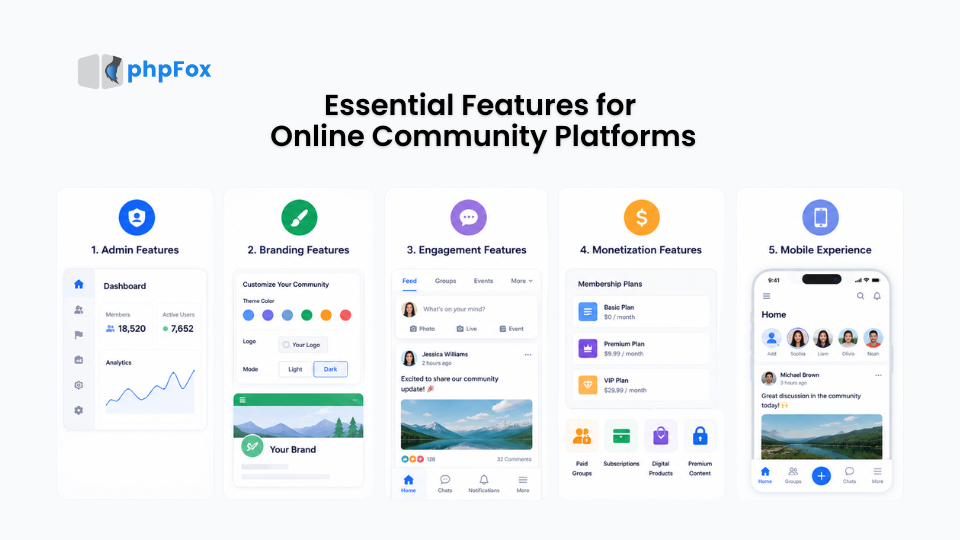 Admin Features – These are the tools that
Admin Features- The toolshelp you manage and organize your community more efficiently. A strong platform should make it easy to:
- Manage members and permissions
- Organize groups and discussions
- Moderate content
- Customize community settings
Branding Features – the tool allows you to build an online community under your own brand, not a social media company’s brand. One of the biggest reasons businesses choose to build an online community on their own platform is ownership and branding. Unlike social media groups, a dedicated community platform should allow you to create a fully branded experience that feels like your business — not someone else’s platform.
- Customize your platform appearances
- Use your own domain
- Dark and light mode options
- Create branded mobile apps
- and build a white-label community experience under their own brand identity
Engagement Features – the tool allows members to interact, communicate, and stay actively connected within your community. A modern online community platform should support:
- activity feeds
- real-time chat and messaging
- groups and forums
- livestreaming
- stories
- notifications
- events
- and mobile-first experiences
Monetization Features – the tool helps you turn your community into a revenue-generating platform Many businesses today don’t just want to build an online community — they also want to monetize it. The right platform should support
- Subscriptions
- Marketplace
- Course
- and advertising opportunities
If you’re looking for a platform to build an online community with full ownership, branding, engagement, and monetization features, you can start exploring phpFox with a free trial.
Step 3: Build and Customize Your Community Experience
Once you’ve chosen the right platform, the real work begins. The next step to build an online community is creating an experience that feels easy, engaging, and true to your brand.
A good community should be simple to navigate and easy for members to participate in. Setting up clear groups, discussions, onboarding flows, and content categories helps people quickly understand where to go and how to engage.
Branding matters too. One of the biggest advantages of using your own online community platform is the ability to create a fully branded experience with your own logo, colors, domain, and mobile app.
Engagement features also make a huge difference. Tools like activity feeds, chat, livestreaming, notifications, and mobile apps help keep members active and connected over time. The goal is to make the community feel alive early on — even before it becomes large. That’s often what creates momentum and helps communities grow naturally over time.
Step 4: Share Your Community With Your Ideal Audience
Once you’ve finished setting up your platform, the next step to successfully build an online community is getting the right people into it. At this stage, growth matters less than relevance.
A smaller group of highly engaged members will always create more momentum than a large audience with little interaction. That’s why successful communities usually start by attracting a very specific audience first.
These early members often shape the culture, conversations, and overall energy of the community. Instead of trying to promote your community everywhere, focus on places where your ideal audience already spends time. This could include:
- your email list,
- social media audience,
- existing customers,
- niche groups,
- online events,
- podcasts,
- or creator collaborations.
It also helps to clearly communicate why people should join your community instead of simply following your content on social media. Members are more likely to join when they understand the value they’ll get — whether that’s networking, exclusive content, discussions, support, learning opportunities, or direct access to your brand.
When you build an online community, the early experience matters a lot. Welcoming new members, starting conversations, and encouraging participation early on helps create the sense of activity people look for before deciding to stay engaged long-term. Over time, these early interactions become the foundation that helps your community grow more organically and sustainably.
Step 5: Keep the Conversation Going
When people first build an online community, there’s usually a lot of excitement at the beginning. Members join, introduce themselves, and conversations start happening naturally. But after that first wave, many communities go quiet. Not because the idea was bad — but because people need a reason to keep coming back.
The communities that grow long-term usually aren’t the biggest or the most polished. They’re the ones that feel active, personal, and consistently alive. Members want to feel like something is always happening, even if it’s something simple. Sometimes that means posting discussion questions. Sometimes it’s hosting a livestream, sharing behind-the-scenes updates, or simply replying to members regularly so conversations keep moving.
When you build an online community, engagement often comes from small interactions repeated consistently over time. People stay where they feel noticed, included, and connected to others with similar interests. This is also why engagement features matter so much. Activity feeds, notifications, chat, and mobile apps help communities stay part of members’ daily routines instead of becoming something they forget about after joining. Over time, those ongoing conversations are what turn a platform into a real community that people actually care about.
Step 6: Grow Your Community Into a Long-Term Business Asset
Once you successfully build an online community and start building engagement, the next step is thinking beyond growth numbers.
The most valuable communities don’t just generate traffic or likes — they create long-term relationships, loyalty, and recurring opportunities for the business behind them.
Over time, your community can become a place where members not only consume content, but also network, learn, share experiences, and support each other. That’s usually when a community starts becoming self-sustaining.
This is also where monetization naturally becomes easier.
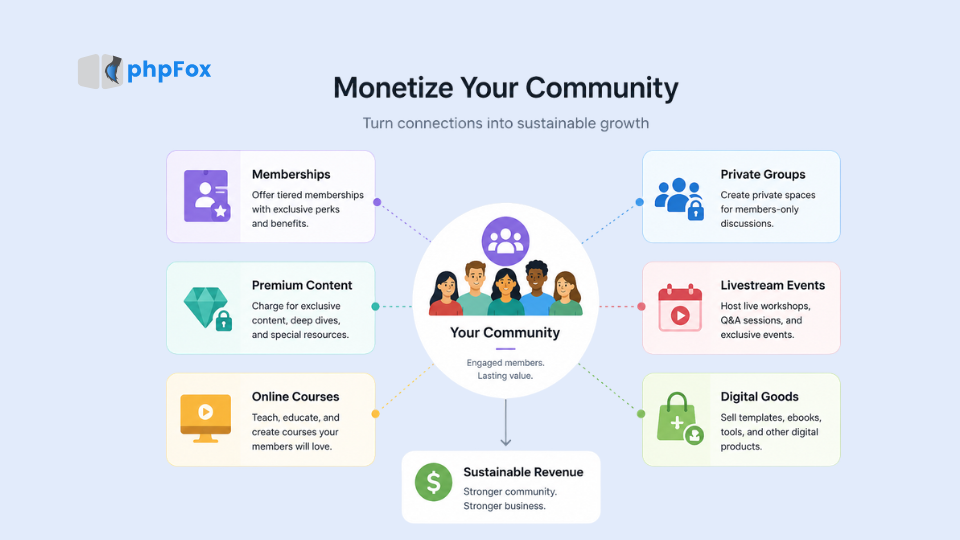
Many businesses eventually expand their communities with:
- memberships,
- premium content,
- online courses,
- private groups,
- livestream events,
- or subscription models.
But the strongest communities usually don’t start by trying to sell immediately. They grow by creating enough trust and value first.
When people genuinely feel connected to a community, they’re far more willing to invest in deeper experiences, exclusive access, or paid memberships later on.
That’s one of the biggest reasons more businesses are choosing to build an online community on platforms they fully own instead of relying entirely on social media. Over time, the community itself becomes an important business asset — one that’s not controlled by changing algorithms or third-party platforms.
Step 7: Keep Listening, Learning, and Improving
When you build an online community, it’s easy to think the hard part is launching.
But in reality, strong communities are built through continuous learning and small improvements over time.
The most successful community owners are usually the ones who stay close to their members. They pay attention to what people are talking about, which conversations create the most engagement, what members struggle with, and what kind of experiences people want more of.
Communities naturally evolve as they grow. New interests appear, member behavior changes, and different types of content start performing better over time. That’s why flexibility matters.
Sometimes improving a community means adding new features. Other times, it’s simply about creating better conversations, organizing content more clearly, or making members feel more connected and heard.
When businesses build an online community, long-term growth usually comes from consistency rather than perfection. The goal isn’t to create a flawless platform on day one — it’s to keep improving the experience as your community grows alongside your audience.
Over time, those small improvements are often what turn an online community into a loyal and lasting ecosystem around your brand.
3/ Final thoughts
Building an online community is no longer just about creating a place for discussions — it’s about building a long-term space where your audience can connect, engage, and grow alongside your brand.
The good news is that you don’t need a massive audience or a perfect strategy to get started. Most successful communities grow gradually through the right platform, consistency, and a clear purpose.
What matters most is creating a space people genuinely find valuable enough to return to.
If you’re ready to build an online community with full ownership, branding, engagement, and monetization features, phpFox gives you everything you need to launch your own community platform with powerful social networking tools and native mobile apps.
Start your 14-day free trial and begin building a community that grows with your brand.