How much does it cost to build an online community platform? It’s usually the first question people ask — and for good reason.
Whether you’re a creator, a business owner, or just getting started, budget is always part of the decision. You want to know what you’re getting into, how much you need to invest, and whether it’s something you can realistically sustain.
But here’s where most people get it wrong. They focus only on the upfront cost.
They compare subscription plans, development quotes, or software pricing, trying to find the cheapest option — without realizing that the real cost of building a community isn’t just what you pay at the beginning, but what you continue to pay as your community grows.
Because some platforms get more expensive as you scale. Some require additional tools just to function properly.
And some limit what you can do, forcing you to upgrade sooner than expected.
So the real question isn’t just: How much does it cost to build an online community platform?
It’s: What are you actually paying for — and what will it cost you in the long run?
In this article, we’ll break down the real cost to build an online community platform, including pricing models, hidden costs, and how to evaluate whether it’s truly worth the investment.
How Much Does It Cost to Build an Online Community Platform?
The cost to build an online community platform can vary a lot, depending on how you approach it and what kind of experience you want to create.
Some people start with a few hundred dollars a month. Others spend thousands upfront to build something custom.
But most costs fall into a few core categories.
1. Platform Cost
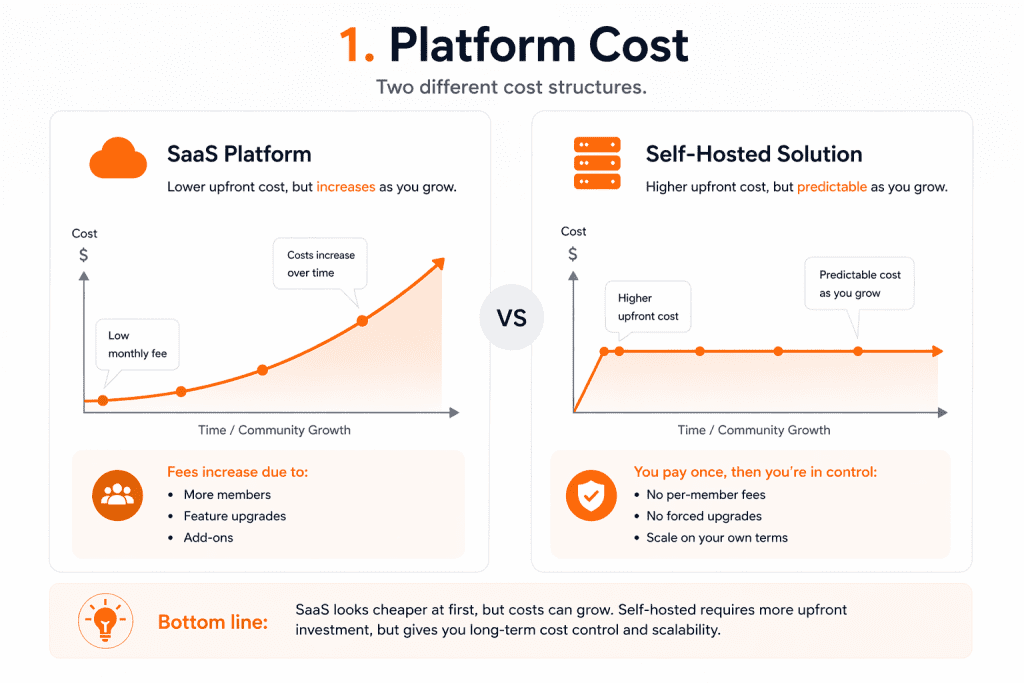
This is your foundation.
If you’re using a SaaS platform, you’ll typically pay a monthly or annual fee. It may seem affordable at first, but as your community grows, costs often increase — whether through member limits, feature upgrades, or add-ons.
With a self-hosted solution, the structure is different. You usually pay a higher upfront cost, but you’re not tied to ongoing platform fees that scale with your growth.
2. Development & Design Cost
If you choose to build a fully custom platform, development can quickly become one of the biggest expenses — hiring developers, managing timelines, and maintaining the system can cost thousands, sometimes tens of thousands, depending on complexity. That’s why many people turn to ready-made platforms instead of starting from zero.
But even then, you’ll likely want your community to reflect your brand. UI adjustments, layout customization, or additional features all add up. Some platforms like phpFox make this easy out of the box with a wide range of built-in features, allowing you to customize the layout using a live editor — while others require extra tools or developer support, which brings the cost right back up.
3. Hosting & Infrastructure
If you’re using a self-hosted community platform, you’ll need to consider hosting costs.
These vary depending on your community size and traffic, but the key difference is control — you decide how your infrastructure scales, instead of being locked into a platform’s pricing model.
4. Maintenance & Support
A community platform isn’t a one-time setup.
You’ll need ongoing updates, support, and sometimes technical assistance. Some platforms include this in their pricing, while others require additional fees or external help.
At this point, you can see that the cost to build an online community platform isn’t just one number — it’s a combination of decisions.
And more importantly, it’s something that evolves over time. Which is exactly why looking at cost alone doesn’t tell you the full story.
5. Hidden Costs Most People Ignore
When people calculate the cost to build an online community platform, they usually focus on the obvious numbers — subscription fees, development costs, or hosting.
But in reality, a lot of the cost comes from things that aren’t clearly listed upfront.
And this is where many people underestimate how much they’ll actually spend.
One of the most common hidden costs is add-ons.
Many platforms look affordable at first, but essential features — like advanced customization, monetization tools, or integrations — are often locked behind higher-tier plans or paid extensions. Over time, these add-ons can significantly increase your total cost.
Then there are transaction fees.
If you’re monetizing your community, some platforms take a percentage of your revenue or charge additional fees per transaction. This might seem small at the beginning, but as your community grows, it directly cuts into your profit.
Another hidden cost is fragmentation.
When your platform doesn’t support everything you need, you end up stitching together multiple tools — for payments, email, analytics, or engagement. Not only does this increase your monthly expenses, but it also makes your system more complex to manage.
And finally, there’s the cost of limitations.
Some platforms restrict what you can customize, how you monetize, or how you access your data. At some point, you may outgrow the platform — and migrating your entire community to a new system can be expensive, time-consuming, and risky.
That’s the kind of cost most people don’t think about until it’s too late.
Strategies to Reduce Costs
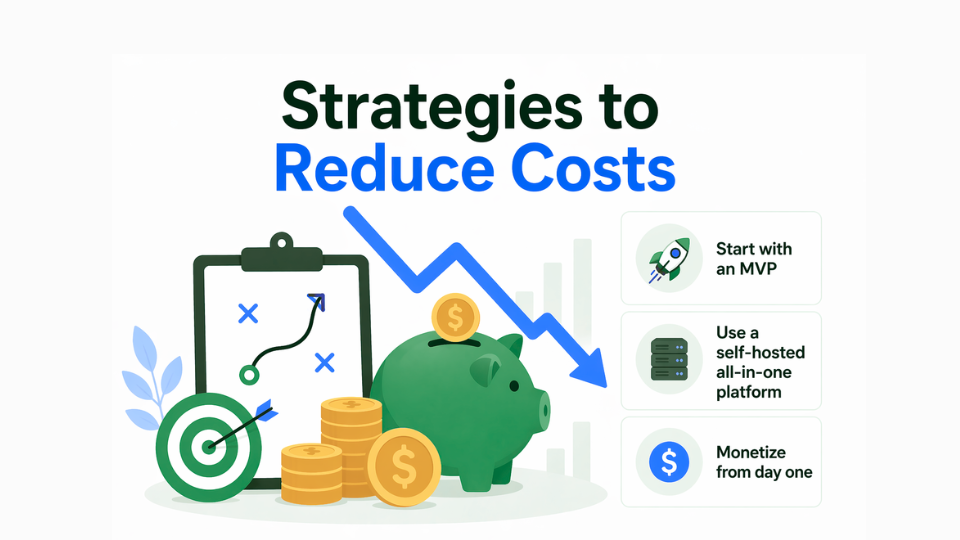
Before committing to a full build, there are a few ways to keep your costs in check without sacrificing quality.
Start with an MVP. You don’t need to launch with everything. Begin with the core features your community actually needs, test whether people show up and engage, then invest more once you’ve validated the idea. Building too much too soon is one of the most common — and most expensive — mistakes.
Use a self-hosted all-in-one platform. Instead of stitching together separate tools for engagement, payments, and analytics, a self-hosted platform like phpFox bundles everything under one roof — and puts you in full control. You own your data, your community, and your revenue streams, without monthly fees that grow as you scale or platform rules that limit what you can do.
Monetize from day one. Don’t wait until your community is “big enough” to start charging, build your revenue – first community from the start. Introducing membership fees or paid tiers early helps offset your operational costs and gives you a real signal on what people are willing to pay for — which shapes how you grow from there.
Conclusion: The Real Cost Is the One You Don’t Plan For
Building an online community platform isn’t just a line item in your budget — it’s a long-term investment. The upfront cost is only part of the picture. What matters more is what you’re paying six months, a year, two years down the road.
Platforms that seem affordable early on can quietly become expensive as you grow — through add-ons, transaction fees, and limitations that force your hand. The communities that scale well are the ones that start with the right foundation from the beginning.
Ready to Build a Community You Actually Own?
phpFox gives you everything you need to launch, grow, and monetize your community — without hidden fees, platform limits, or revenue cuts.