Vendor lock-in in community platforms: The Hidden Limits of SaaS and 5 steps to Take Back Control of Your Digital Assets
In the modern creator economy, “ease of use” is often sold as the ultimate benefit. For many founders, Software-as-a-Service (SaaS) platforms provide a tempting entry point: a standardized setup, a recurring fee, and an immediate launch. However, for a scaling enterprise, this convenience often hides a strategic vulnerability known as Vendor Lock-in.
In this article, we’ll explain what vendor lock-in in community platforms is, how it can secretly limit your business, and five practical steps to help you regain control of your digital assets.
What is vendor lock-in in community platforms?
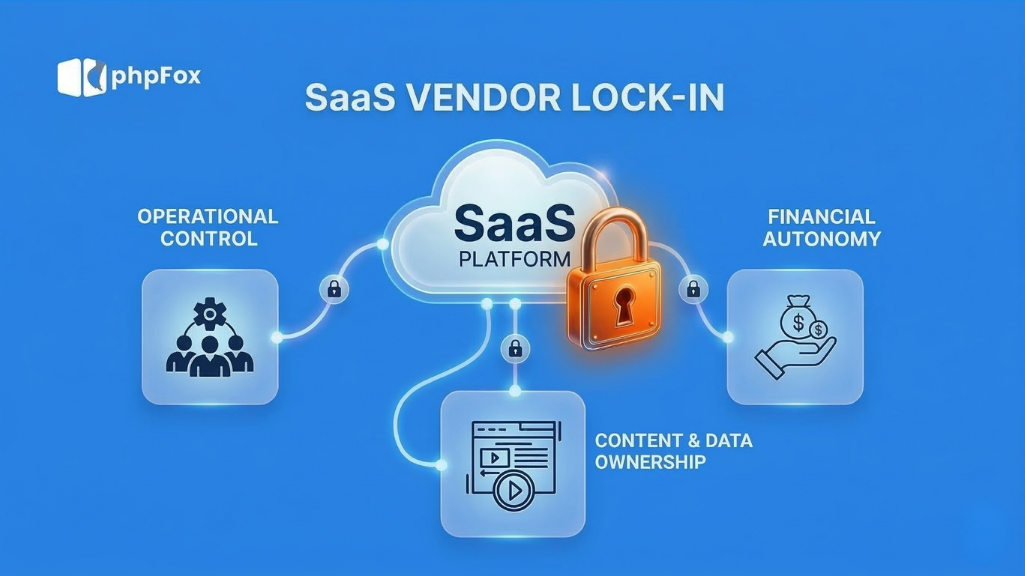
Vendor lock-in in community platforms happens when it becomes extremely difficult or expensive to move your community from one platform to another. Over time, your business becomes dependent on a single provider — their pricing, their feature updates, and their data policies.
When your community lives entirely inside someone else’s platform, you don’t fully control it anymore.
Example:
Imagine you build a community with 20,000 members on a SaaS platform. At first, everything works well. But after a few years:
- The platform increases its monthly price
- Some important features are removed or restricted
- Exporting your member data is limited
Even if you want to leave, migrating your members, content, and data to another platform becomes very difficult. As a result, you are forced to stay — this is vendor lock-in community platforms.
For businesses where the community is the core product, this can become a serious long-term risk. That’s why, when choosing a community platform, the most important question isn’t just “How fast can I launch?” It should be: “Will I still be in control once my community becomes successful?” If you are currently in the evaluation phase, the most important question is not how quickly you can start, but how much control you will retain as your community grows.
How Vendor Lock-in in community platforms silently limits your business
Vendor lock-in community platforms rarely feels like a problem at the beginning. Most SaaS platforms are designed to make it very easy to start — quick setup, simple onboarding, and ready-made features.
But as your community grows, the limitations slowly begin to appear. Over time, these small limitations can turn into serious obstacles for your business growth.
Many creators on platforms like Mighty Networks or Circle eventually face this challenge when their communities reach scale. What works well for launching a community may not always support long-term growth.
Here are some of the most common ways vendor lock-in can silently limit your business.
1. You Lose Control Over Pricing
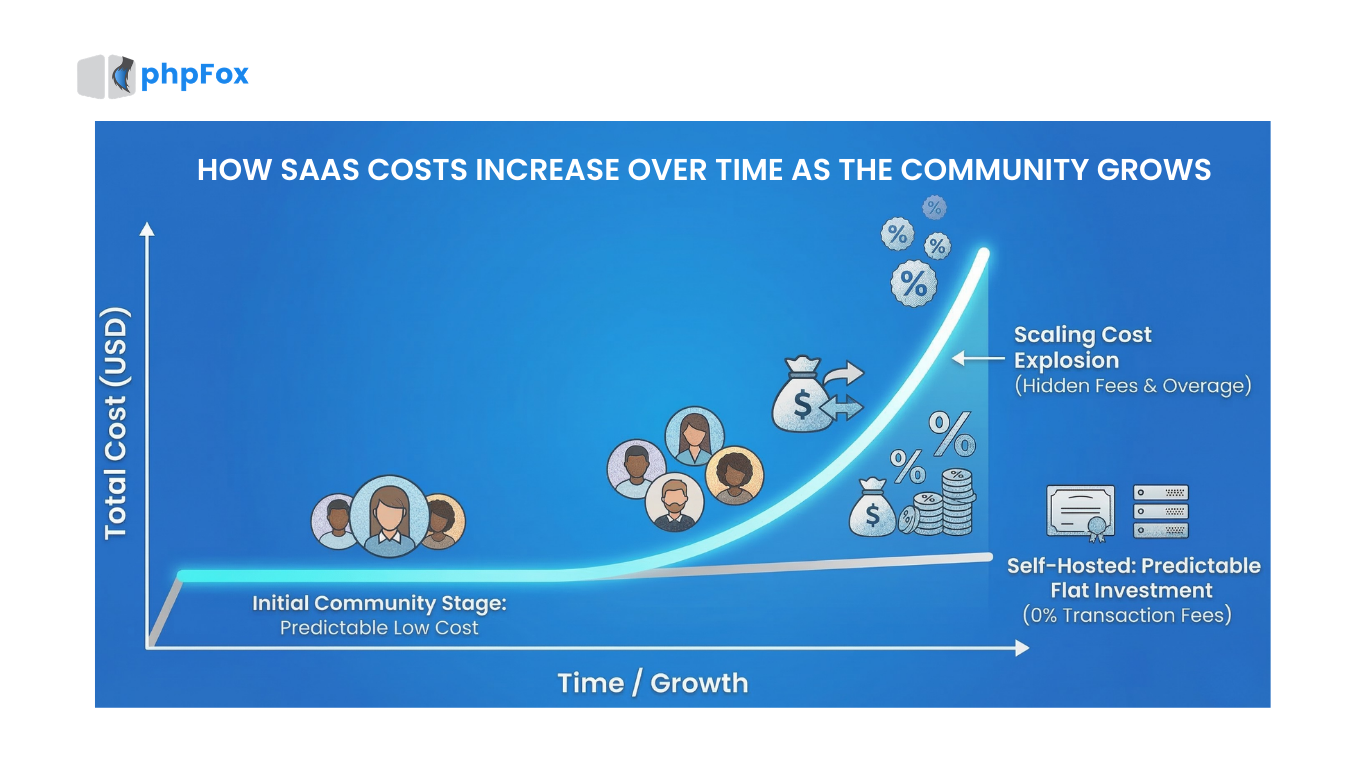
Many SaaS platforms operate on a subscription model. At the beginning, the cost may seem reasonable. But as your community grows and your needs increase, pricing tiers can rise quickly.
For example, you might start at $49 per month, but later you are required to upgrade to $199 or $399 per month to unlock essential features like advanced analytics, integrations, or higher member limits.
Because your entire community already lives on that platform, leaving becomes difficult. As a result, you are forced to accept pricing changes that you cannot control.
2. Your Product Roadmap Is No Longer in Your Hands
When you rely on a third-party platform, you are also relying on their product roadmap. That means:
- Features you need may take years to be developed.
- Important tools might never be built.
- Existing features could be removed or changed.
Your business strategy becomes dependent on the platform’s priorities instead of your own.
For a community-driven business, this can slow down innovation and limit your ability to experiment with new ideas.
3. Limited Customization for Your Brand
Most SaaS community platforms provide templates and predefined layouts. While these are convenient for beginners, they often limit how much you can customize the experience. Over time, this can create problems such as:
- Your community looking similar to many others
- Limited control over user experience
- Difficulty building a truly unique brand ecosystem
For businesses that want their community to be a core product, these limitations can prevent deeper brand differentiation.
4. Your Data Is Not Fully Under Your Control
Your community data is one of your most valuable digital assets. This includes:
- Member profiles
- Conversations and content
- Behavioral data
- Engagement history
However, on many SaaS platforms, accessing or exporting this data can be restricted. Some platforms provide limited export options, while others require complex processes to retrieve your own data. This makes migration much harder if you ever decide to move to another platform.
5. Growth Can Become More Expensive Over Time
As your community grows, your infrastructure needs also grow. On many SaaS platforms, pricing increases based on:
- number of members
- storage usage
- advanced features
- integrations
What started as a small monthly expense can gradually become a significant operational cost.
In some cases, the platform that helped you grow can eventually become one of the biggest barriers to scaling your business.
5 Steps You Can Take to Take Back Control of Your Digital Assets
Avoiding vendor lock-in in community platforms isn’t just about choosing a different one. It’s about building your community in a way that protects your ownership, flexibility, and long-term growth.
Here are four practical steps founders can take to regain control of their digital assets and build a more sustainable community business.
Step 1: Shift From Platform Dependency to Digital Ownership
The first step is changing how you think about your community platform.
With most SaaS platforms, you are essentially renting space for your community. As long as you continue paying the subscription and follow the platform’s policies, your community can operate. But the platform still controls the infrastructure, the roadmap, and sometimes even the data.
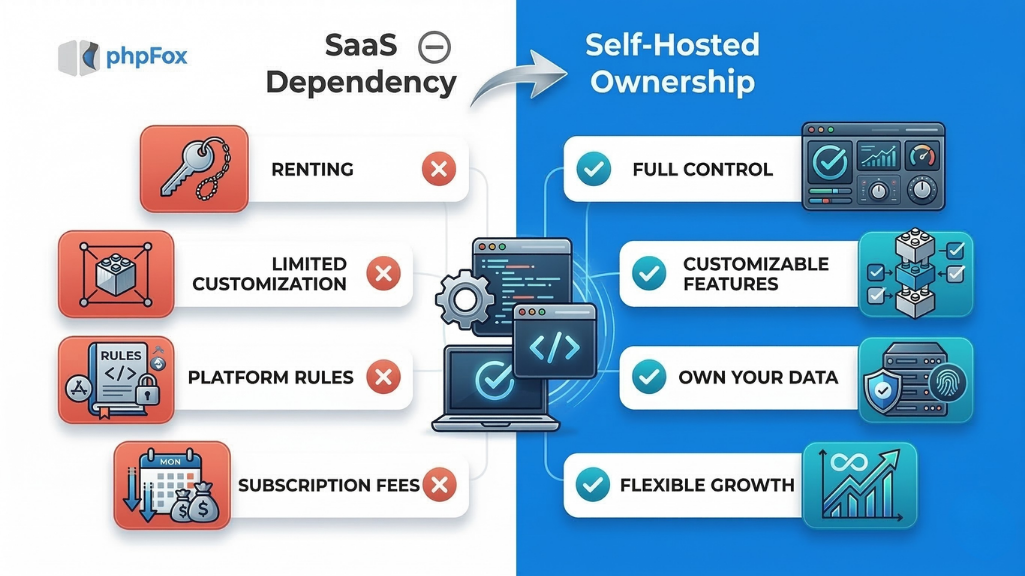
This is the dependency model. A different approach is the ownership model.
In an ownership model, your community platform becomes part of your business infrastructure. You control the software, the data, and the user experience. This gives you the freedom to grow and evolve your community without relying on another company’s product decisions.
For founders building communities as a core product, this shift from subscriber to owner is one of the most important strategic decisions.
Step 2: Evaluate the Real Long-Term Cost
Subscription platforms often look affordable at the beginning. But as your community grows, the total cost can increase significantly. There are several reasons for this:
Transaction fees.
Many SaaS platforms take a percentage of every payment made inside your community. If your community generates $100,000 in annual revenue and the platform charges a 3% transaction fee, that means $3,000 goes directly to the platform every year.
Forced upgrades.
As your member count grows, platforms may require you to upgrade to more expensive pricing tiers just to unlock essential tools such as integrations, analytics, or API access. Over several years, these costs can become much higher than expected.
That’s why founders should look beyond the monthly price and ask a more important question: ” What will this platform cost my business in three to five years?”
Understanding the total cost early helps you make a more sustainable long-term decision.
Step 3: Choose Technology That Supports Flexibility
Your community platform should support your growth, not limit it.
Many SaaS platforms operate in closed environments where customization options are limited. If you want to integrate with other tools, create new features, or build a unique experience for your members, you may quickly hit technical restrictions.
A more flexible platform allows you to:
- integrate your community with other business tools such as CRM, email marketing, or analytics platforms
- build custom features that support your specific business model
- optimize performance and infrastructure as your member base grows
For founders and agencies, this flexibility can become a real competitive advantage. Instead of adapting your business to the platform’s limitations, you can shape the platform to support your business goals.
Platforms like phpFox are designed with this type of flexibility in mind. phpFox runs on the MetaFox Framework, a modern architecture that allows developers and businesses to customize, extend, and integrate the platform as their community grows.
Because the system is modular and developer-friendly, businesses can add new features, connect external services, or adapt the user experience to match their evolving community strategy.
Step 4: Build a Community Experience That Reflects Your Brand
On many SaaS platforms, communities look very similar because they rely on standardized templates and limited customization options. While this may be convenient at first, it can make it difficult to build a truly unique experience for your members.
When you have full control over your platform, you can design a community that aligns with your brand identity and your business model. This includes:
- creating a custom user experience
- designing unique member journeys
- structuring the platform around your specific goals
A distinctive experience helps strengthen your brand and gives members a stronger reason to stay engaged.
Step 5: Control How Your Community Generates Revenue
For many founders, the community itself becomes a key part of their revenue model. You might want to offer:
- paid memberships
- premium content
- exclusive events
- marketplaces or digital products
However, some platforms limit how you can monetize or take a percentage of your revenue. Owning your platform gives you full control over how your community generates income. You decide the pricing model, the payment flows, and the monetization strategy.
Instead of sharing revenue with a platform provider, you keep the value created by your own community.
The platform you choose today will shape how your community grows tomorrow.
For many founders, SaaS platforms offer the fastest way to launch. But as the community becomes a real part of the business — generating engagement, brand value, and revenue — questions about ownership, control, and long-term flexibility start to matter much more.
That’s why it’s important to think beyond the convenience of getting started quickly. The real goal is to build your community on a foundation that can support your business for years to come.
Try phpFox today to start building your online community on infrastructure you control. Your data, your revenue streams, and your member experience remain part of your own ecosystem — not dependent on another platform’s roadmap or pricing decisions.