You’ve spent months—maybe even years—building a community on Facebook Groups, Discord, or Telegram.
Then one algorithm change cuts your reach in half. Important announcements get buried in crowded feeds. New members stop seeing your content, even after choosing to join your community.
The reality is simple: when you build on someone else’s platform, someone else controls how your community grows.
That’s why more creators, coaches, associations, and businesses are moving beyond social media to build their own niche community platforms. Instead of borrowing an audience on someone else’s platform, they’re creating branded communities they fully control—complete with memberships, subscriptions, mobile apps, and direct ownership of their member data.
In this guide, we’ll explain what a niche community platform is, why it’s becoming essential for long-term community growth, and the seven biggest reasons organizations are making the switch in 2026.
What Is a Niche Community Platform?
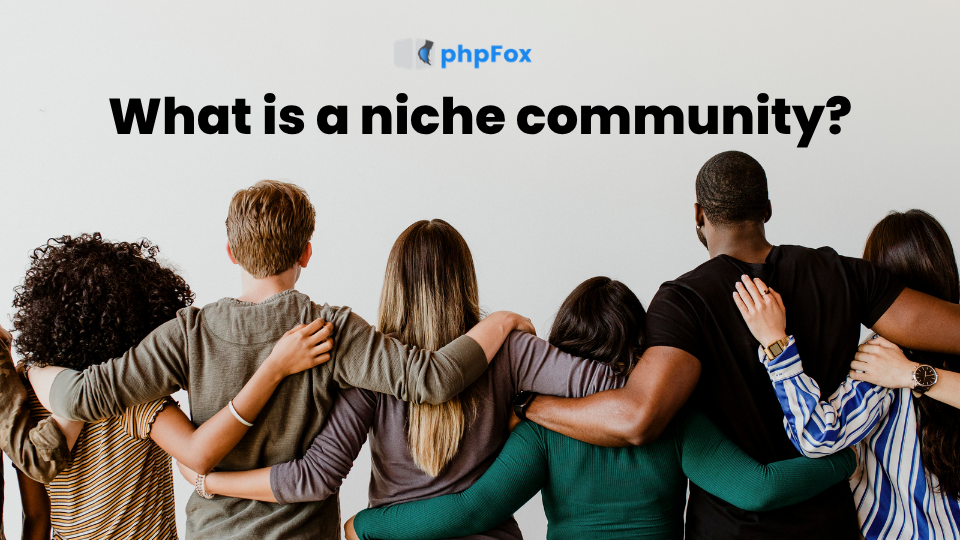
A niche community platform is a dedicated online space built for people who share a specific interest, profession, identity, or goal. Unlike public social networks, it gives community owners complete control over the member experience, branding, content, and data while bringing discussions, memberships, events, and exclusive resources together in one place.
The key difference is ownership.
Instead of building your audience inside someone else’s ecosystem, a niche community platform allows you to create a space that belongs entirely to your organization—whether that’s through a white-label community, a self-hosted community platform, or a branded membership experience.
Examples of Niche Communities
A niche community can be built around almost any shared interest, profession, or mission. The key isn’t the size of the audience—it’s how specific and connected that audience is.
Some examples include:
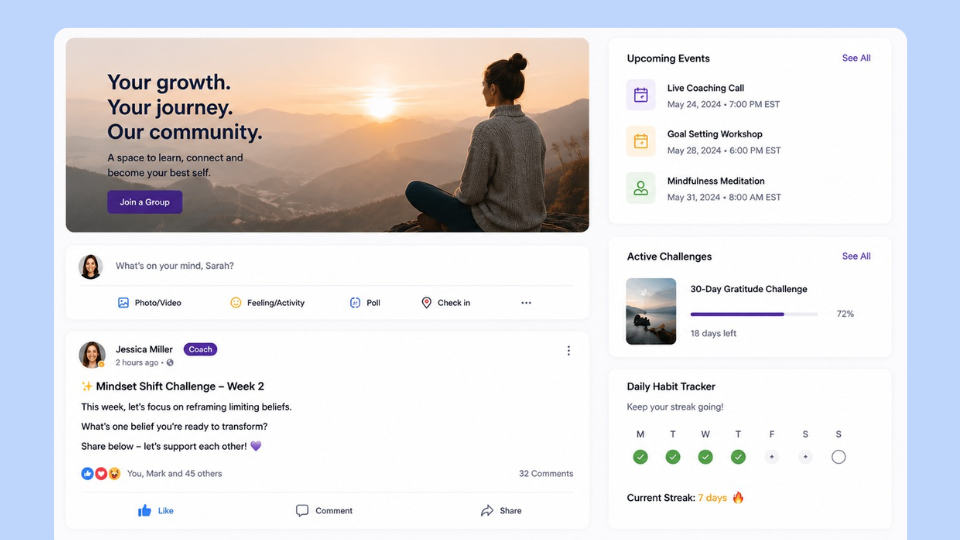
- A coaching business where members access exclusive training, participate in group discussions, and receive ongoing support through paid memberships.
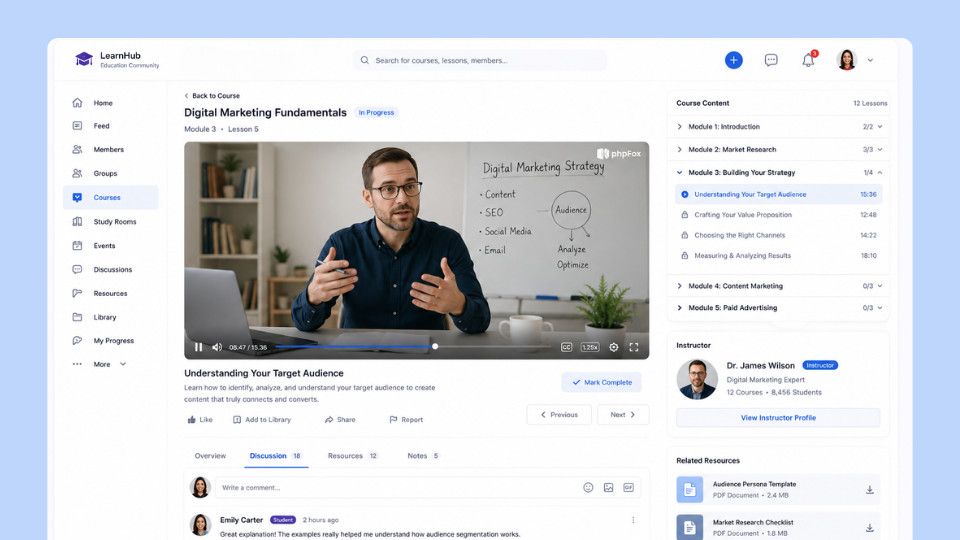
- A faith-based community where members share sermons, organize events, and stay connected beyond weekly gatherings.
- A gaming community where players discuss strategies, organize tournaments, and build lasting friendships around a shared passion.
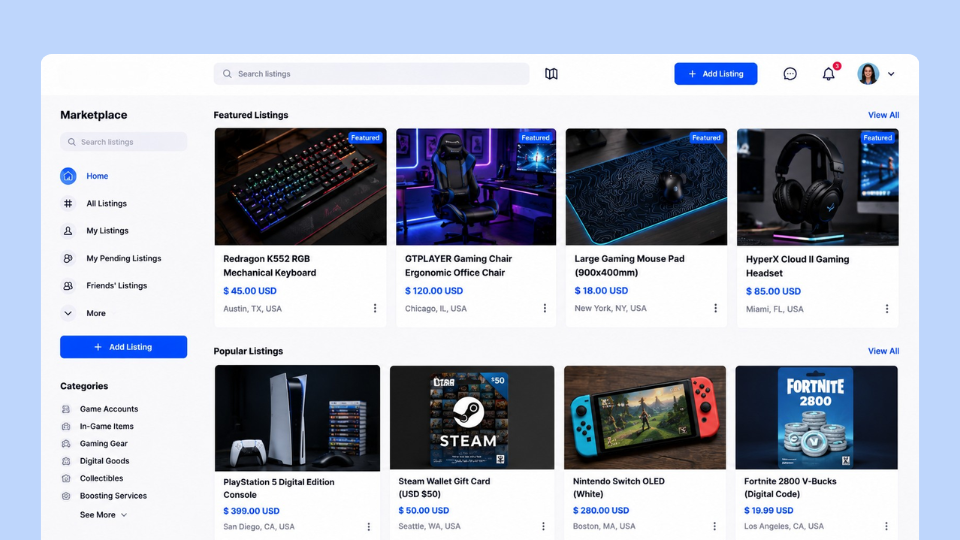
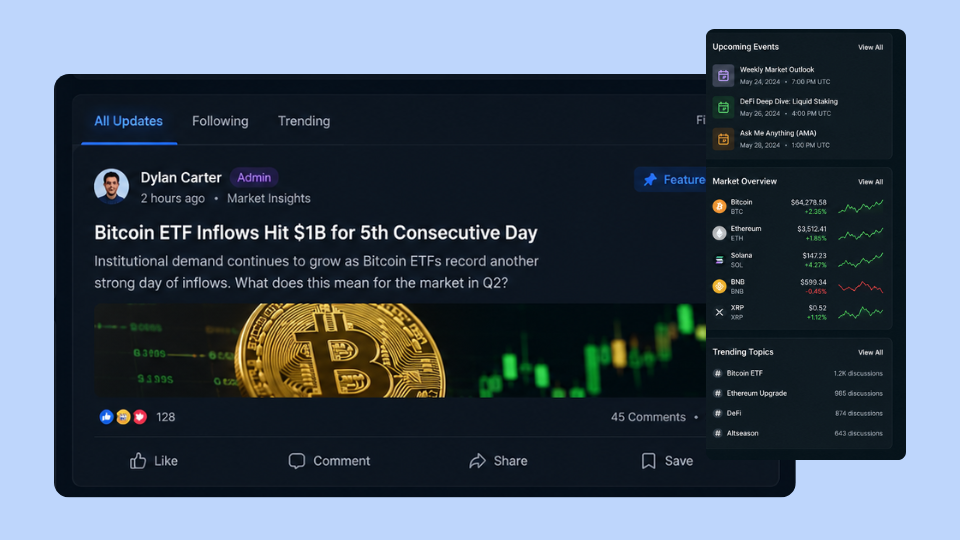
- A cryptocurrency community where investors and developers exchange market insights, educational content, and project updates in a dedicated space.
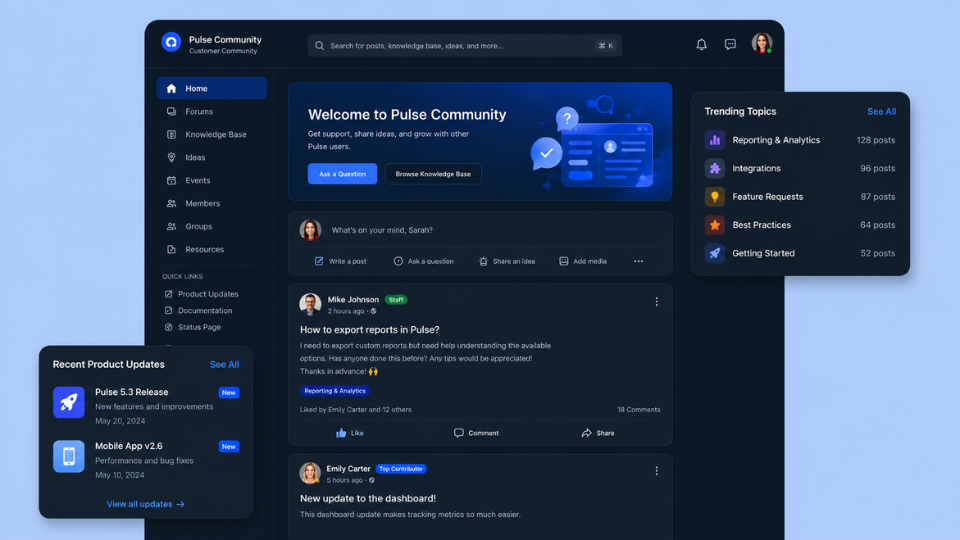
- A customer community where brands provide product support, collect feedback, and help customers learn from one another.
- A professional association where members network, access exclusive resources, register for events, and collaborate with peers in their industry.
What all of these communities have in common is a shared purpose. They’re built around meaningful conversations and long-term relationships—not chasing likes, followers, or viral content.
For example, fitness is a broad topic. But a niche community might focus specifically on women over 50 training for their first marathon, CrossFit gym owners, or new moms returning to fitness after childbirth. The more specific the audience, the stronger the sense of belonging.
That’s why niche communities often achieve higher engagement and retention than broad social networks. Members aren’t joining to scroll endlessly—they’re joining to connect with people who understand their goals, challenges, and experiences.
Check how easily you can launch a niche community with phpFox

If you’re looking to migrate your community from Facebook or Discord to phpFox, we’d be happy to assess your needs and provide a customized migration estimate. Reach out to us to discuss your project. 👇

Niche Community Platform vs. Niche Social Media
These two terms are often confused, but they’re not the same.
A niche social media platform is one that anyone can join because they share a common interest. Goodreads connects readers. Strava connects athletes. Letterboxd connects movie enthusiasts.
A niche community platform, on the other hand, is software that allows you to build and own your own community.
Think of it this way:
| Niche Social Media | Niche Community Platform |
| Join someone else’s network | Build and own your own community |
| The platform owns the infrastructure | You control the platform |
| Limited branding | Fully branded experience |
| Limited monetization options | Memberships, subscriptions, courses, digital products |
| Platform controls policies | You define your own rules |
If your goal is to participate in an existing community, a niche social network may be enough.
But if you’re building a business, membership organization, or creator brand, a niche community platform gives you something social media never can: ownership of your members, your data, and your future growth.
Why Niche Communities Struggle on Mainstream Social Media
For many community builders, mainstream social platforms are where everything begins.
Facebook Groups, Discord servers, Telegram channels, and Reddit communities make it incredibly easy to gather people around a shared interest. They’re free, familiar, and require almost no technical setup.
But they’re also built for the platform—not for your business.
As your community grows, you begin to realize how much of the experience is outside your control.
You Don’t Control Who Sees Your Content
Social media platforms decide what appears in members’ feeds through constantly changing algorithms.
Even highly engaged communities often find that only a portion of their members actually see new discussions, announcements, or events. That means your ability to communicate with your own audience depends on decisions made by a third-party platform.
Your Community Lives on Borrowed Land
Perhaps the biggest limitation is ownership.
Your members may spend years interacting inside a Facebook Group or Discord server, but you don’t own the platform, the infrastructure, or the rules that govern it.
If policies change, features disappear, pricing increases, or the platform shifts direction, your community has little choice but to adapt.
Monetization Is Often Limited
Many creators eventually want to offer paid memberships, premium content, courses, digital products, or exclusive events.
While some social platforms have introduced monetization features, they’re typically designed around the platform’s ecosystem—not yours.
That often means limited customization, platform fees, and fewer ways to create a fully branded member experience.
Some Communities Face Greater Moderation Challenges
This becomes even more important for communities operating in specialized or regulated industries.
Faith-based organizations, firearms enthusiasts, cryptocurrency communities, healthcare professionals, political organizations, and other niche groups often navigate stricter moderation policies than general-interest communities.
Even when discussions follow the rules, changes in platform policies or automated moderation systems can affect visibility, reach, or account stability.
For organizations investing years into building a community, relying entirely on a third-party platform introduces a level of uncertainty that many eventually decide to move beyond.
That’s why more organizations are choosing to build their own niche community platform—one where they control the member experience, branding, and long-term direction of their community.
7 Real Reasons Why You Should Start a Niche Community Platform in 2026
Building a niche community isn’t just about creating another place for people to talk. The most successful communities become valuable business assets that generate recurring revenue, strengthen customer relationships, and reduce dependence on third-party platforms.
Here are seven reasons why more organizations are investing in their own niche community platform
1. Escape the Limits of Social Media Algorithms
Algorithms are designed to maximize platform engagement—not your community’s growth. A niche community platform flips that model by putting your members, your content, and your business goals at the center of every interaction.
2. Own Your Members and Data—Not an Algorithm
Every interaction your members make creates valuable data.
Profile information, discussions, purchases, event attendance, engagement history, and communication preferences all help you better understand your audience and deliver more personalized experiences.
On social media, much of that data belongs to the platform—not you.
A niche community platform changes that. Instead of building your business on borrowed land, you own your member database and have direct access to the insights that help your community grow.
More importantly, you decide how members are reached—not an algorithm that changes every few months.
Ownership doesn’t just reduce risk. It gives your organization the freedom to build long-term relationships without depending on someone else’s platform.
3. Monetize Your Community on Your Own Terms
Communities create value. The question is whether your organization can capture it.
With your own niche community platform, monetization isn’t limited to advertising or creator funds. You can build recurring revenue around the products and experiences your audience actually wants.
Many community builders generate revenue through:
- Paid memberships
- Subscription plans
- Online courses
- Premium discussion groups
- Exclusive content
- Digital products
- Virtual or in-person events
- Coaching and consulting programs
Instead of directing members to multiple tools, everything can happen within the same ecosystem, creating a smoother experience for both your organization and your members.
As your community grows, your revenue opportunities grow with it.
4. Sensitive Communities Need a Stable Home
Not every community fits comfortably on mainstream social platforms.
Organizations serving faith-based communities, cryptocurrency projects, healthcare professionals, political organizations, or other specialized audiences often operate within categories that experience stricter moderation or evolving platform policies.
Even when content complies with community guidelines, algorithm changes and automated moderation can impact visibility or member engagement. Building your own niche community platform provides greater stability.
Your organization defines the rules, manages the member experience, and creates an environment designed specifically for your audience—not one optimized for millions of unrelated users.
For many niche communities, that level of control isn’t simply a preference—it’s a long-term business necessity.
5. Private Communities Create Stronger Member Collaboration
People are more likely to stay where they feel they belong.
Unlike public social networks, a dedicated community creates a stronger sense of identity and exclusivity. Members aren’t competing with endless notifications, viral videos, or unrelated content. Instead, every conversation is relevant to the shared purpose that brought the community together.
Whether you’re building a parenting community, coaching program, fitness membership, alumni network, or customer community, a focused environment encourages deeper conversations and stronger relationships.
The result isn’t just more engagement—it’s higher member retention over time.
Communities that consistently deliver value become places members return to, not just websites they occasionally visit.
6. A Branded Mobile App Keeps Members Coming Back
Today’s communities don’t live only on desktop computers.
Members expect to access discussions, events, messages, and exclusive content wherever they are. Without a mobile experience, engagement often drops because visiting the community requires extra effort.
A branded mobile app removes that friction.
Members receive push notifications, participate in conversations, register for events, and access member-only content directly from their phones—all within an app carrying your organization’s name and branding.
The easier it is for members to participate, the more likely your community becomes part of their daily routine.
7. Your Community Grows With Your Business
The platform you choose today should still support your organization years from now.
Many communities begin with a few hundred members inside a Facebook Group or Discord server. As they grow, they often need memberships, subscriptions, branded mobile apps, custom integrations, advanced analytics, and greater control over the member experience.
A scalable niche community platform grows alongside your business instead of forcing you to migrate every time your needs evolve.
Whether you’re expanding into new markets, launching premium memberships, or building an entire digital ecosystem around your community, the right platform gives you the flexibility to grow without starting over.
Because the goal isn’t simply to build a community. It’s to build a community that continues creating value for your members—and your business—for years to come.
The Biggest Shift in 2026
Organizations are no longer choosing a community platform based solely on features. They’re choosing based on ownership. The ability to own your members, your brand, your data, and your revenue is becoming the biggest competitive advantage for long-term community builders. That’s exactly what phpFox is built to deliver.
Real Examples: How Organizations Use phpFox to Build a Niche Community
Meet Oliver Ranft, founder of the Christian Coaching Network, who transformed his coaching business into a thriving membership community with phpFox.
Oliver Ranft is the founder of Christian Coaching Network (CCN), a platform that helps Christian coaches, consultants, and individuals grow through faith-based coaching and meaningful connections. His vision wasn’t just to sell coaching programs—it was to build a digital community where members could learn, support one another, and grow together.
Instead of investing over $100,000 to build a custom platform from scratch, Oliver chose phpFox to launch a fully branded community with memberships, private groups, payments, and social networking features—all in one place. Today, his community has generated 3,118+ posts and over 28,000 comments, creating an active space where members connect every day.
Read Oliver’s story, or watch the video to see how he built a coaching business with a thriving online community with phpFox.
What to Look for in a Niche Community Platform Before You Commit
Not all niche community platforms are built for long-term growth.
Some are designed to help you launch quickly, while others are built to support growing memberships, recurring revenue, and a fully branded community experience. The right choice depends on where you want your community to be—not just next month, but years from now.
Before committing to a platform, here are the features that matter most.
Community Ownership
The biggest question to ask isn’t “What features does this platform offer?” It’s “Who owns my community?”
As your community grows, so does the value of your member database, discussions, content, and engagement history. Make sure your platform gives you ownership of your member data and the flexibility to export it if your needs change.
Building a community takes years. Your data should always belong to you.
White-Label Branding
Your community should strengthen your brand, not someone else’s.
A white-label community platform allows you to customize your logo, colors, domain, and overall member experience so every interaction reinforces your organization’s identity.
The more professional and consistent the experience feels, the more likely members are to trust your community and return regularly.
Built-In Community Monetization
If you plan to monetize your community, don’t wait until after you’ve launched.
Look for a platform that supports memberships, recurring subscriptions, online courses, premium content, digital products, or event ticketing from the start.
Adding monetization later is often far more difficult than choosing a platform that’s designed for it from day one.
Mobile Experience
Today’s communities are mobile-first.
Whether members are joining discussions, registering for events, or consuming premium content, they expect a smooth experience on their phones.
A branded mobile app with push notifications makes it easier for members to stay engaged and helps turn occasional visits into daily habits.
Scalability
The platform that works for your first 200 members should still work when you have 20,000.
As your organization grows, you’ll likely need more than discussions and member profiles. You may want custom integrations, multiple membership levels, advanced permissions, analytics, or dedicated infrastructure.
Choosing a scalable platform today can save you from an expensive migration later.
APIs & Customization
Every community is different.
Some organizations need CRM integrations. Others require payment gateways, learning management systems, single sign-on, or custom workflows.
An open API and flexible customization options give your organization the freedom to adapt the platform to your business—not the other way around.
Final Thoughts
The most successful niche communities aren’t necessarily the largest—they’re the most relevant. When members feel they’re part of a community built specifically for them, they’re more likely to participate, stay engaged, and remain members for the long term.
If you’re looking for a platform that combines community ownership, white-label branding, flexible monetization, and powerful engagement tools, phpFox is built to help you create a community that’s truly yours.
Ready to build a community you own?
Start your 14-day free trial and discover how phpFox helps creators, organizations, and businesses launch fully branded niche communities with complete ownership of their members, data, and revenue.