A membership management platform does much more than keep track of who has paid their membership fees. It serves as the operational hub for associations, nonprofits, clubs, and member-based organizations—bringing together member records, payments, renewals, events, communications, and engagement in one place.
Most organizations evaluate membership software based on features, pricing, or ease of use. But one question is often overlooked: Who actually owns the member data your organization has spent years building?
It’s a question worth asking. Your member database contains far more than contact information—it represents your organization’s relationships, history, and long-term value.
In this guide, we’ll explore what a membership management platform is, why data ownership matters just as much as data security, and the seven features that actually protect your member data.
What Is a Membership Management Platform?
A membership management platform is a centralized platform that helps organizations onboard members, customers, or clients, manage subscriptions and payments, and keep people engaged long after they join.
Instead of juggling spreadsheets, payment tools, email software, and multiple communication apps, everything—from member profiles and renewals to community engagement and exclusive content—can be managed in one place. The result is a better member experience, stronger relationships, and higher long-term retention.
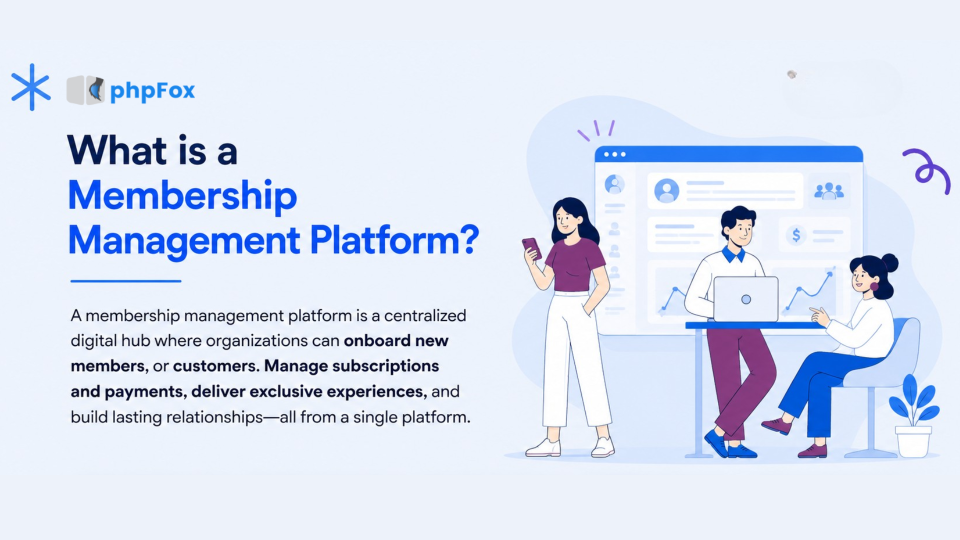
Depending on the organization, a membership management platform may also serve as a customer community or member portal where members can update their profiles, renew memberships, register for events, access exclusive resources, connect with other members, and participate in online discussions.
Today, many organizations are also looking beyond traditional membership software. Rather than using a platform that simply tracks memberships, they’re choosing solutions that combine membership management with community building, collaboration, and engagement.
This is where modern, self-hosted and white-label membership platforms stand out. In addition to managing memberships, they allow organizations to build branded member communities while maintaining full ownership of their data, branding, and member experience.
After all, managing members is only part of the equation. Building lasting relationships with them is what creates long-term value for both the organization and its members.
What “Data Protection” Actually Means in a Membership Management Platform
When software vendors talk about data protection, the conversation usually starts with technical security.
You’ll see terms like SSL encryption, SOC 2 compliance, ISO 27001 certification, automated backups, and multi-factor authentication. These are all important. They help protect your data from unauthorized access, cyberattacks, and system failures.
But here’s what many buyers overlook:
Security and ownership are not the same thing.
Remember, a platform can be highly secure while still giving you very little control over your own data.
Real protection means your organization decides what happens to member records . For example, can you export every member record—including profiles, payment history, engagement activity, and communication logs—in a usable format whenever you choose? Can you decide where your data is hosted? If your organization outgrows the platform, how easy is it to migrate without losing years of valuable information?
These questions have less to do with cybersecurity and more to do with data ownership.
Think of it this way:
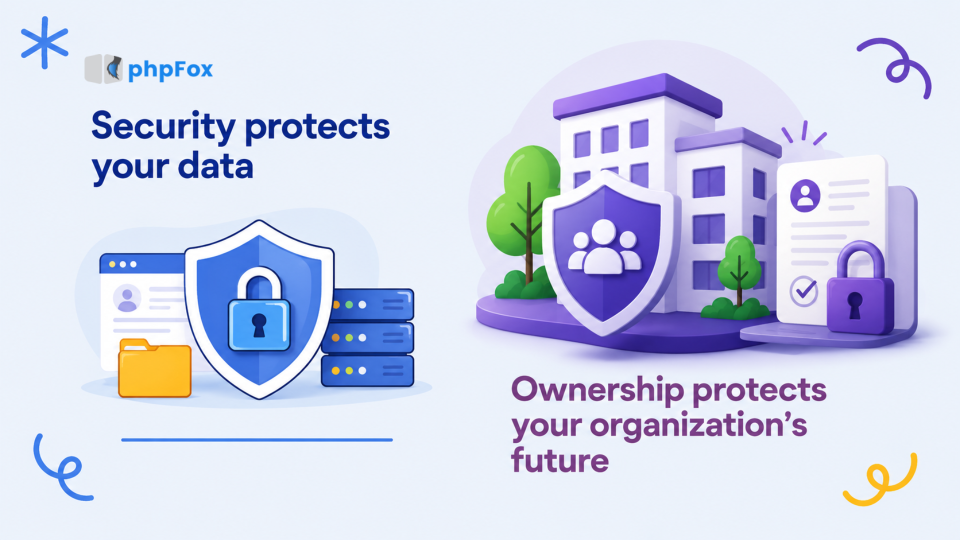
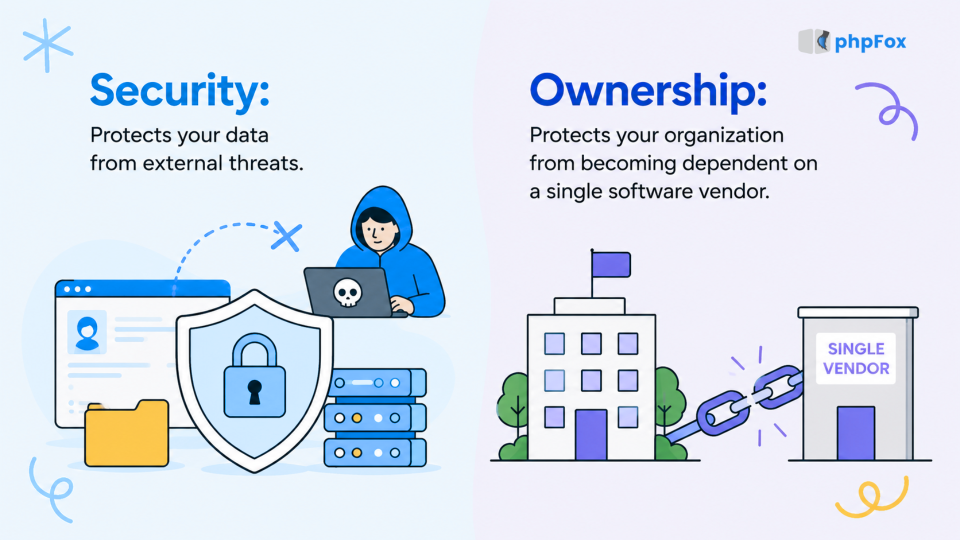
- Security protects your data from external threats.
- Ownership protects your organization from becoming dependent on a single software vendor.
Both matter, but only one gives your organization long-term freedom.
This distinction becomes even more important for organizations that manage sensitive member information, such as nonprofits, professional associations, healthcare organizations, and educational institutions. For these organizations, member data isn’t simply operational information—it’s one of the organization’s most valuable long-term assets.
The best membership management platforms recognize this by combining strong security practices with features that ensure organizations retain control over their own member information, regardless of how their technology needs evolve in the future.
7 Features That Actually Protect Your Member Data
Not every membership management platform gives you the same level of control over your member data. While most platforms offer similar administrative features, the real difference lies in how they store, manage, and let you access the information your organization depends on.
Here are seven features worth prioritizing if protecting your member data is part of your long-term strategy.
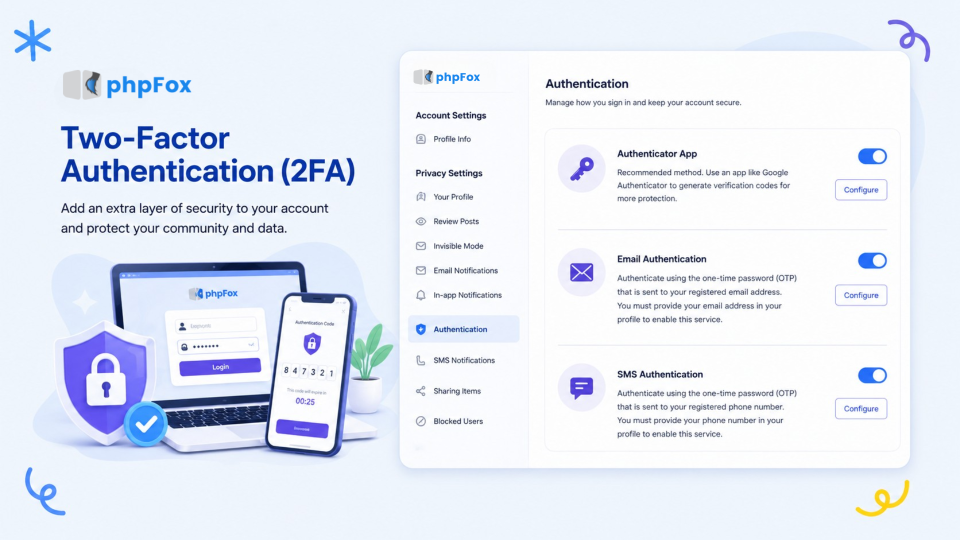
1. Two-Factor Authentication (2FA)
Cybercriminals increasingly rely on credential stuffing—using stolen usernames and passwords from previous data breaches to access other online accounts. If members reuse passwords across different services, a single compromised password could expose sensitive member information.
That’s why a modern membership management platform should support Two-Factor Authentication (2FA).
By requiring users to verify their identity with a second factor—such as an authentication app, SMS code, or email verification—even a stolen password is no longer enough to access an account.
For organizations managing member records, payment information, or private community discussions, 2FA provides an additional layer of protection that significantly reduces the risk of unauthorized access.
2. Member Self-Service Portal
One of the easiest ways to protect member data is to reduce how often staff have to handle it.
Without a member self-service portal, members typically email administrators whenever they need to update their address, phone number, communication preferences, or membership details. Besides creating unnecessary administrative work, this also increases the risk of personal information being shared through email or stored in multiple places.
A secure member portal allows members to update their own profiles, renew memberships, manage subscriptions, register for events, and control their communication preferences anytime.
The result is more than operational efficiency. Your organization maintains more accurate member records while reducing manual data handling and giving members greater control over their own information.
3. Self-Hosted or Dedicated Infrastructure
Where your member data lives matters just as much as how it’s protected.
Many SaaS membership platforms host thousands of organizations on the same shared infrastructure. While this approach is convenient and cost-effective, it also means your organization has limited control over hosting policies, server locations, backup strategies, or infrastructure changes.
A self-hosted membership platform or dedicated hosting environment gives organizations greater control over where their data is stored and how it’s managed. This is particularly valuable for organizations with strict compliance requirements, internal IT policies, or industry-specific regulations.
For many associations and nonprofits, it’s not simply about security—it’s about maintaining long-term ownership of their digital infrastructure.
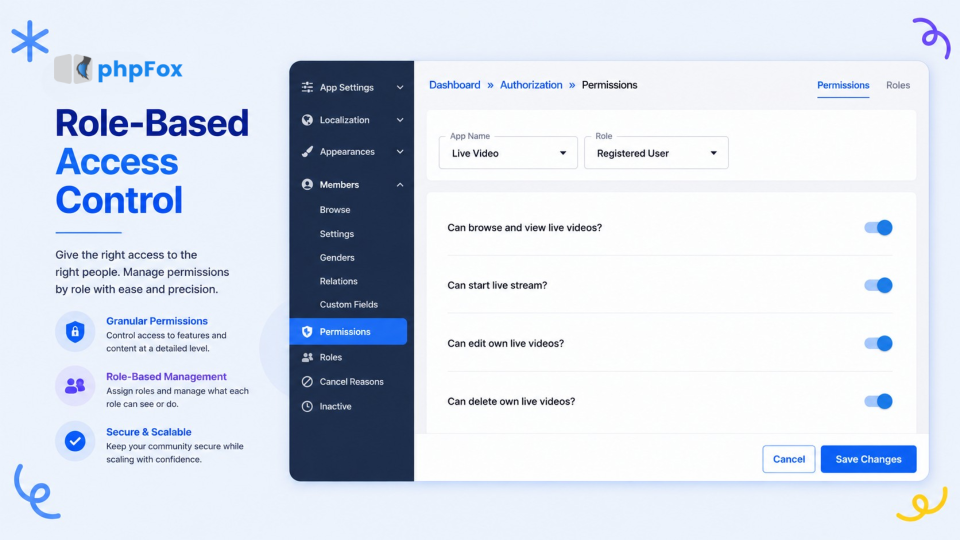
4. Role-Based Access Control
Not everyone in your organization should have access to every piece of member information.
Membership databases often contain sensitive information, including payment records, personal contact details, membership status, and private communications. Without proper permission controls, accidental changes or unauthorized access become much more likely.
Look for a platform that lets administrators define role-based permissions, allowing different teams to access only the information they need.
For example:
- Finance teams can manage payments without editing member profiles.
- Event coordinators can access registrations without viewing financial records.
- Volunteers can assist members without gaining administrative privileges.
The more precisely you control access, the lower the risk of internal data exposure.
5. Member Consent & Communication Control
Protecting member data also means respecting how it’s used.
Email marketing, newsletters, event invitations, and renewal reminders all rely on member contact information. Without proper consent management, organizations risk violating privacy regulations such as GDPR, CAN-SPAM, or other regional data protection laws.
A good membership platform should allow members to manage their own communication preferences, update consent settings, and control how their personal information is used.
Beyond compliance, giving members transparency over their data builds trust—something every membership-based organization depends on.
6. Payment Processing
Managing memberships becomes much easier when payments are built directly into your membership management platform.
Instead of juggling multiple payment systems, organizations can collect membership fees, subscription payments, event registrations, and other transactions from a single platform. A seamless checkout experience not only improves the member experience but also reduces administrative work for your team.
Recurring billing is equally important. Whether you’re offering annual memberships or monthly subscriptions, automated renewals help maintain a predictable revenue stream while reducing missed payments and manual follow-ups.
When evaluating a membership management platform, look for one that integrates with trusted payment gateways, supports multiple payment methods, and automates recurring billing. The easier it is for members to pay, the easier it is for your organization to retain them.
7. A Branded Mobile App
For many organizations, member engagement is increasingly happening on mobile devices.
A white-label mobile app allows members to access your community, events, discussions, and member resources under your organization’s own brand. More importantly, it strengthens your direct relationship with members rather than placing that relationship inside someone else’s ecosystem.
Members download your app, see your logo, and engage with your organization—not a generic platform shared with thousands of other communities.
Combined with a self-hosted membership platform, a branded mobile app gives organizations greater control over the overall member experience while reinforcing long-term ownership of both their brand and member relationships.
SaaS Membership Platforms vs. Self-Hosted: Where Data Ownership Actually Differs
When evaluating a membership management platform, one of the biggest decisions isn’t about features—it’s about deployment.
Should you choose a SaaS membership platform that’s ready to use out of the box, or a self-hosted membership platform that gives your organization complete control?
Neither approach is inherently better. The right choice depends on your organization’s priorities, technical resources, and long-term goals.
If your primary concern is launching quickly with minimal setup, SaaS can be an excellent option. But if your organization views member data as a long-term business asset, ownership becomes an equally important consideration.
Here’s how the two approaches compare.
| Feature | SaaS Membership Platform | Self-Hosted Membership Platform |
| Setup time | Fast, with little technical setup | Requires hosting and initial configuration |
| Infrastructure management | Managed by the software provider | Managed by your organization or hosting partner |
| Data ownership | Data is stored within the vendor’s infrastructure | Your organization controls where data is stored |
| Data portability | Export options vary by vendor | Full access to your database and files |
| Branding | Often limited to logos and colors | Fully customizable, including your own domain and experience |
| Customization | Limited to vendor-supported features | Extensive customization through code, APIs, and integrations |
| Scalability | Easy to scale within the vendor’s ecosystem | Scales according to your own infrastructure |
| Vendor dependency | Higher | Lower |
| Best for | Small organizations, startups, and teams that want simplicity | Organizations prioritizing ownership, flexibility, and long-term control |
When a SaaS Membership Platform Makes Sense
SaaS platforms are popular for a reason.
They’re quick to deploy, require little technical expertise, and handle software updates, backups, and maintenance automatically. For small associations, clubs, nonprofits, or organizations launching a membership program for the first time, this simplicity can outweigh the benefits of owning the underlying infrastructure.
If your organization has a few hundred members and limited IT resources, a SaaS membership platform may be the fastest path to getting started.
When Self-Hosted Is the Better Long-Term Investment
As organizations grow, their priorities often change.
What begins as a simple member directory gradually becomes a database containing years of membership history, payment records, event participation, communication preferences, and community engagement. At that point, the platform is no longer just software—it’s the foundation of your member relationships.
A self-hosted membership management platform gives organizations greater control over that foundation.
Instead of relying entirely on a vendor’s infrastructure, pricing decisions, and product roadmap, organizations retain ownership of their data, choose where it’s hosted, and customize the platform to match their operational needs.
This level of control is particularly valuable for organizations that:
- Manage thousands of member records.
- Require advanced branding or a white-label member portal.
- Need custom integrations with internal systems.
- Must comply with industry-specific privacy or security requirements.
- Want the flexibility to evolve without being limited by a vendor’s roadmap.
Ownership Isn’t About Today—It’s About Five Years From Now
Many organizations don’t think about data ownership until they need to migrate to a new platform.
By then, years of member information, payment history, engagement data, and organizational knowledge are deeply tied to one system.
Choosing a membership management platform with strong data ownership capabilities isn’t about planning to leave your software—it’s about ensuring your organization always has the freedom to do so if your needs change.
Security protects your data today, ownership protects your organization’s future.
If long-term ownership, customization, and branding are priorities, a self-hosted membership platform is often the better fit. Unlike many SaaS solutions, self-hosted platforms give organizations full control over their infrastructure, member data, and digital experience.
phpFox is one example. As a self-hosted, white-label membership management platform, phpFox enables organizations to own their data, customize every aspect of the member experience, and launch fully branded web and mobile communities—all without being locked into a vendor-controlled ecosystem.
If your organization is looking for a membership management platform that prioritizes data ownership, flexibility, and long-term scalability, it’s worth exploring what phpFox has to offer. 👉

Who Should Use a Membership Management Platform?
Not every organization manages members in the same way. A professional association has different needs from a fitness club or a nonprofit, but they all share one common goal: building stronger relationships with their members while keeping operations organized and secure.
Here are the types of organizations that benefit most from a modern membership management platform.
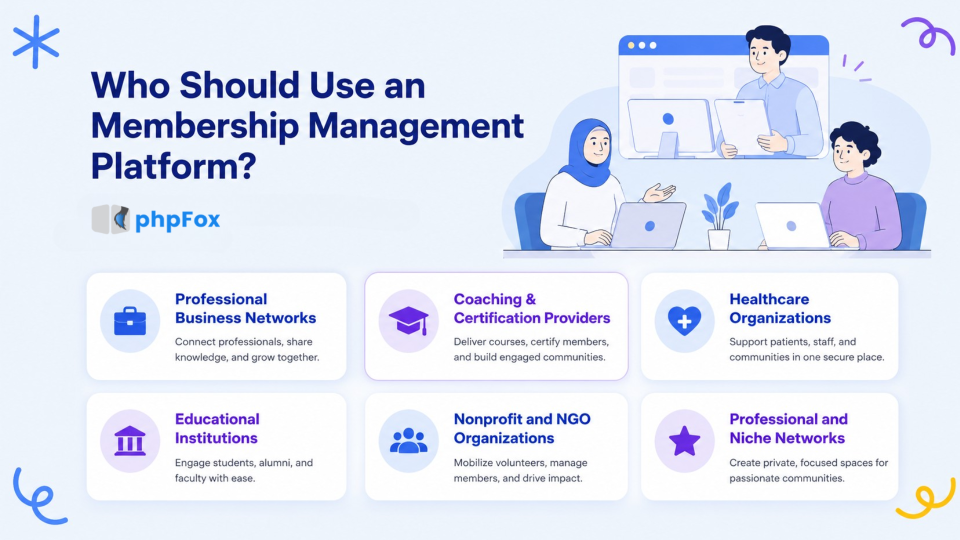
Professional Business Network
Professional associations depend on accurate member records to manage memberships, certifications, continuing education, and networking opportunities.
A membership management platform helps streamline renewals, organize member directories, manage exclusive resources, and foster collaboration through a secure member portal. For larger associations, owning member data also ensures long-term continuity as leadership and technology evolve.
Nonprofit Organizations
For nonprofits, members, donors, volunteers, and supporters often overlap.
A centralized platform makes it easier to manage memberships, collect recurring donations, organize fundraising events, and communicate with supporters—all while maintaining accurate member records and protecting sensitive personal information.
As nonprofits grow, having complete ownership of donor and member data becomes increasingly valuable.
Healthcare Organizations
Healthcare organizations often need a secure way to manage communication with staff, members, patients, or professional communities while protecting sensitive information.
A membership management platform provides controlled access to member resources, private discussion spaces, event registrations, and organizational updates—all within a secure environment. Features such as role-based permissions, audit logs, and privacy controls help organizations manage sensitive data while ensuring only authorized users can access specific information.
For organizations operating under strict compliance requirements, choosing a platform with strong security and data ownership capabilities becomes even more important.
Educational Institutions
Universities, colleges, and educational organizations manage multiple communities—from students and alumni to faculty members and professional networks.
Instead of using separate systems for communication, memberships, and events, a membership management platform creates a centralized hub where members can update their profiles, access exclusive resources, join groups, register for events, and stay connected long after graduation.
By bringing engagement, communication, and membership management together, educational institutions can strengthen lifelong relationships with their communities.
Professional Business Networks
Business organizations rely on member engagement to deliver value.
Whether it’s promoting local businesses, organizing networking events, publishing member directories, or facilitating discussions, a membership management platform creates a central hub where businesses can connect and collaborate.
A branded member portal also strengthens the organization’s identity while giving members exclusive access to valuable resources.
Coaching & Certification Providers
For coaches, trainers, and certification providers, membership is about more than selling courses—it’s about creating an ongoing learning experience.
A membership management platform allows organizations to onboard new members, manage paid subscriptions, deliver member-only content, organize online communities, and automate recurring payments. Members can access learning materials, participate in discussions, register for events, and renew their memberships from one centralized platform.
The result is a smoother learning journey, stronger engagement, and higher retention throughout the customer lifecycle.
Final Thoughts
Choosing a membership management platform is about much more than organizing member records or automating renewals. It’s about selecting the foundation your organization will rely on for years to come.
The best platforms don’t just help you manage memberships—they help you protect one of your most valuable assets: your member data. That means looking beyond feature checklists and asking bigger questions about ownership, flexibility, security, and long-term scalability.
If your organization values complete control over its data, wants the freedom to customize every aspect of the member experience, and plans to build a branded community that grows alongside your business, a self-hosted membership management platform may be the right long-term investment.
Start your 14-day free trial and discover how phpFox helps organizations build secure, branded membership communities with complete control over their data.