Building an online community platform today has never been easier — anyone can sign up for a Facebook group or sign up for a SaaS platform and start inviting members within minutes, invite a few people in, and start seeing conversations happen almost immediately, which is why so many creators, coaches, and businesses believe they’ve already built something valuable. But as time goes on, a different reality starts to surface — you don’t actually control your members, you don’t fully own your data, and more importantly, you’re constantly limited by algorithms, platform rules, and features that were never designed around your specific community in the first place.
That’s when many people realize they haven’t built a real asset — just a community living on someone else’s platform.
If you want to grow, scale, and monetize your community on your own terms, you need something you actually own. The good news is, building your own online community platform is now more accessible than ever, even without a technical background.
In this article, we’ll walk you through how to launch your own online community platform step by step — so you can build something you fully control and grow without limitations.
1. What Is an Online Community Platform?
An online community platform is a dedicated space where your audience can connect, interact, and engage around a shared interest — all within an environment that you control.
Unlike traditional social media groups, a community platform software is built specifically to help you manage members, organize content, and create meaningful interactions in a structured and scalable way.
At its core, an online community platform allows you to:
- Bring your audience into one centralized space
- Facilitate discussions, groups, and content sharing
- Build deeper relationships with your members
- And, most importantly, maintain full control over your data and experience
2. How Is It Different from Social Media or SaaS Platforms?
At first glance, tools like Facebook Groups or SaaS-based community platforms may seem similar — they all let you gather people and start conversations. But the key difference lies in ownership and control.
With social media:
- Your reach depends on algorithms
- Your data belongs to the platform
- Your community can be affected by policy changes
With many SaaS platforms:
- You get more structure, but still limited control
- Customization is restricted
- You rely on a third-party system to operate your community
In contrast, a self-hosted online community platform gives you:
- Full ownership of your members and data
- Flexibility to customize features and experience
- The ability to scale and monetize without restrictions
3. Why You Should Build Your Own Community Platform
When you rely on third-party platforms, your community might look like it’s growing, but in reality, you’re operating within someone else’s system, rules, and limitations. That’s why more creators, coaches, and businesses are moving toward a self-hosted community platform — not just to grow, but to truly take control.
3.1. You Own Your Data — Not the Platform
One of the biggest advantages of building your own platform is simple:
👉 You own your community.
Your members, your content, your data — everything belongs to you.
On social media or most SaaS platforms, you’re only “borrowing” access to your audience. If policies change, accounts get restricted, or features are removed, you risk losing the very thing you’ve spent years building.
With a self-hosted solution, your community becomes a real asset — not something that can disappear overnight.
3.2. No Algorithms Limiting Your Growth
On social platforms, your community’s visibility is always filtered through algorithms you don’t control, which means even your most engaged members might miss your content simply because it isn’t prioritized, leading to inconsistent reach, lower engagement, and growth that feels unpredictable over time; but when you run your own online community platform, you remove that layer entirely and gain full control over how content is delivered and how your members interact.
3.3. Freedom to Monetize Your Community
If you’re building a membership community platform, monetization should be something you design around your audience — not something restricted by the platform — yet many tools limit how you charge, what you offer, or even take a cut of your revenue; by owning your platform, you have the flexibility to create subscription models, offer premium experiences, and build revenue streams that align with your business without external constraints.
4. How to build your own online community platform — step-by-step guide
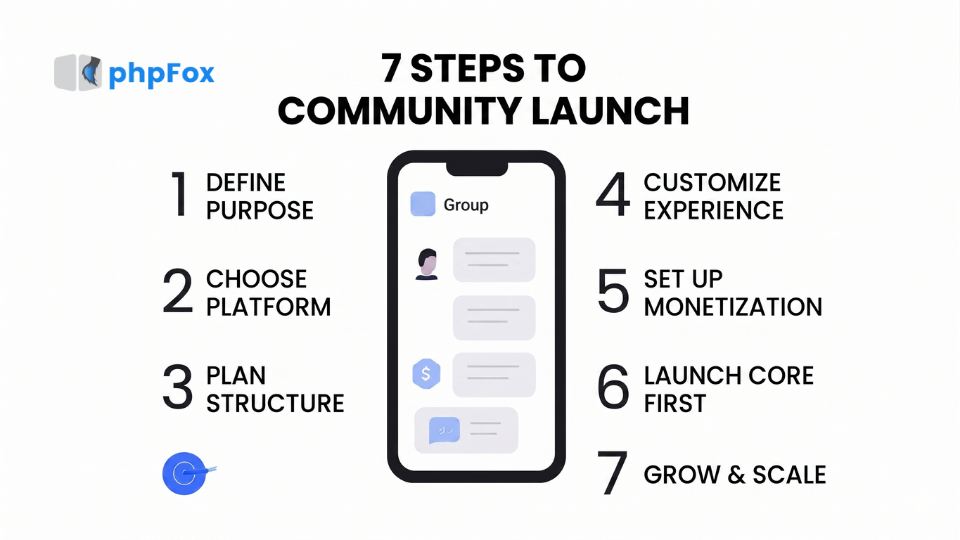
Step 1: Define What Your Community Is Really About
Before choosing any community platform software, you need to answer one simple question:
👉 Why would people join — and stay?
Most communities fail not because of technology, but because they lack clarity.
Ask yourself:
- Who is this community for?
- What problem are you solving?
- What value do members consistently get?
If you’re building a membership community platform, this step is even more critical.
People don’t pay for access. They pay for transformation, connection, or exclusive value.
Without a clear purpose, even the best platform won’t save your community.
Step 2: Choose the Right Community Platform Software
This is where most people make the biggest mistake.
They choose what’s easy — not what’s scalable.
There are two main options:
1. SaaS Platforms
- Quick to start
- Limited control
- Ongoing monthly costs
- You don’t fully own your data
2. Self-Hosted Community Platforms
- Full ownership
- Full customization
- Scalable long-term
- No dependency on third-party rules
If your goal is to build a community platform that becomes a real business asset, a self-hosted community platform is the better choice. You can read more about Why Successful Brands Choose Self-Hosted Online Community Over Social Media
This is where solutions like phpFox come in — giving you the flexibility to build without starting from scratch.
👉 The decision you make here will define your community’s future.
Step 3: Plan Your Community Structure
Once you’ve chosen your platform, the next step is to design how your community works.
Think of it like building a house — structure comes before decoration.
Key elements to plan:
- Member roles (admin, moderator, member)
- Content types (posts, groups, discussions, media)
- Access levels (public vs private vs paid)
A well-structured online community platform makes it easy for users to:
- Navigate
- Engage
- Stay longer
Remember that poor structure = low engagement, no matter how good your content is.
Step 4: Customize Your Community Experience
This is where your community starts to feel like yours.
Unlike generic platforms, a customizable community platform software lets you:
- Match your branding
- Design your user experience
- Create features tailored to your niche
This is especially important if you’re building a membership community platform.
Because your platform isn’t just a tool — it’s part of your product.
The more aligned your platform is with your audience, the stronger your community becomes.
Step 5: Set Up Monetization (If Applicable)
If your goal is to generate revenue, don’t leave monetization for later. Build it into your system from the start.
Common monetization models:
- Subscription (monthly/yearly)
- Paid groups or premium content
- Courses or digital products
- Events and experiences
The advantage of owning your online community platform is simple: You control how you make money — without platform restrictions or fees.
Step 6: Launch with a Core Community First
You don’t need thousands of users on day one. In fact, you shouldn’t.
Let’s start with:
- A small group of engaged members
- People who already trust you
- Early adopters are willing to give feedback
Focus on:
- Conversations
- Engagement
- Value delivery
A small, active community is far more powerful than a large, silent one.
Step 7: Grow and Scale Your Community
Once your foundation is strong, growth becomes easier — and more sustainable.
To scale your online community platform, focus on:
- Consistent content
- Member interaction
- Community-led engagement
Over time, your community becomes:
- Self-sustaining
- More valuable
- A true business asset
5. Key Features Your Community Platform Should Have
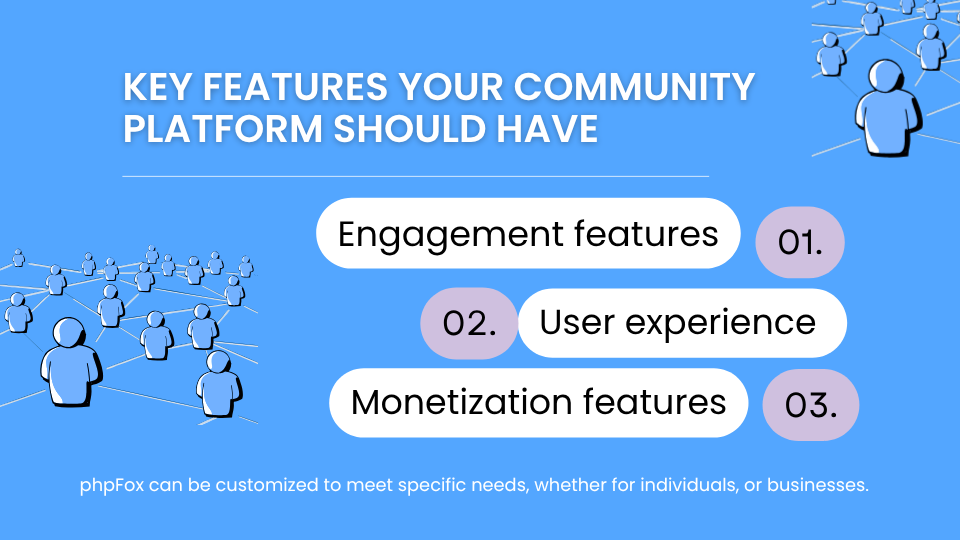
Not all platforms are built the same — and choosing the right set of community platform features can make the difference between a community that feels active and one that slowly fades out over time.
If you’re serious about building a scalable online community platform, you need more than just a place for people to post — you need a system designed to support engagement, connection, and long-term growth.
Here are the essential online community features your platform should include:
Engagement Features
To keep your community active, your platform needs to make interaction easy and natural, not forced.
This includes:
- Real-time chat and private messaging
- Group discussions and forums
- Live streaming and events
- Notifications to keep members engaged
The goal is simple: make it effortless for members to connect, interact, and come back regularly.
User Experience & Structure
A growing community needs structure and a smooth experience; it quickly becomes messy and hard to navigate.
This includes:
- Customizable user profiles
- Organized groups or sub-communities
- Clean, intuitive interface
- Mobile-first or native app experience
A well-designed experience helps members stay longer and participate more.
Monetization Features
If you’re building a membership community platform, monetization should be built into the system — not added later.
This includes:
- Subscription plans (monthly/yearly)
- Paid groups or premium content
- Access control for different member tiers
- Integration with payment systems
This is what turns your community from a cost center into a revenue-generating asset.
6. How Much Does It Cost to Build a Community Platform?
One of the first questions people ask is: What’s the real cost to build an online community platform?
The answer depends on how you build — and more importantly, how you plan to scale.
SaaS vs Self-Hosted Cost
SaaS platforms are easy to start with, but costs grow over time through subscriptions, feature upgrades, and per-user fees — meaning the more your community grows, the more you pay.
A self-hosted online community platform, on the other hand, usually requires a higher upfront cost, but gives you full control without ongoing platform fees tied to growth.
Hidden Costs to Watch Out For
Many platforms seem affordable at first, but real costs often come from add-ons, integrations, transaction fees, or forced upgrades as your needs grow — turning a low-cost option into a long-term expense.
7. Why phpFox Is a Smart Choice for Building Your Community
At this point, it’s clear that building a community on third-party platforms comes with trade-offs — limited control, restricted customization, and a system that doesn’t fully belong to you.
If your goal is to create something that grows long-term, those limitations will eventually slow you down.
That’s where the phpFox community platform comes in.
Instead of building on top of someone else’s ecosystem, phpFox gives you a self-hosted community platform that you fully own and control — turning your community into a real asset rather than just a temporary space.
Built for Ownership: With phpFox, your members, your data, and your content are entirely yours — giving you the freedom to operate your community without worrying about algorithm changes, platform restrictions, or losing access to what you’ve built.
Designed for Customization: Every community is different, and phpFox is built to adapt to that. From layout and features to user experience, you can shape your platform around your niche, your audience, and your business model — instead of trying to fit into a one-size-fits-all solution.
Ready to Scale with You: As your community grows, your platform needs to grow with it. phpFox is designed to support that journey — whether you’re starting small or scaling into a large membership community platform, without the limitations or increasing costs that often come with SaaS tools.
👉 In the end, it’s not just about building a community — it’s about building one you actually own, control, and can grow on your own terms.
Final thought: Build a Community — or Build an Asset
Building a community today is easier than ever — but building one that actually lasts is a different story.
Because at the end of the day, if you don’t own your platform, you don’t fully control your growth. You’re limited by systems, rules, and decisions that aren’t yours — and that makes it hard to scale, monetize, or turn your community into something sustainable.
On the other hand, when you build your own online community platform, you’re not just creating a space for people to connect — you’re building a long-term asset that you can grow, shape, and evolve on your own terms.
That shift changes everything.